

TL;DR:
- Personalized LinkedIn outreach significantly increases acceptance and response rates over generic messages.
- Effective strategies include referencing real content, using clear goals, and nurturing relationships through follow-ups.
- Slow, human-centric outreach builds trust and sustainable pipelines, avoiding reputation damage from mass messaging.
Most LinkedIn outreach fails before it even gets read. Sales managers send generic connection requests, copy-paste templates into InMail, and then wonder why their pipeline stays empty. The truth is, personalised connection requests see acceptance rates of 40 to 60%, compared to just 20 to 30% for generic messages. The gap is enormous. This article gives you field-tested outreach examples, a clear framework for choosing your approach, and practical templates you can apply today to generate more qualified conversations on LinkedIn.
Table of Contents
- How to evaluate LinkedIn outreach strategies
- Personalised connection request examples
- Effective follow-up messages and InMail outreach
- Outreach scenarios: which approach fits your goal?
- What most LinkedIn outreach guides miss
- Supercharge your LinkedIn outreach with expert support
- Frequently asked questions
Key Takeaways
| Point | Details |
|---|---|
| Personalisation wins | Tailored requests and messages dramatically boost reply and acceptance rates on LinkedIn. |
| Follow-ups are vital | Most LinkedIn replies come from thoughtful follow-up messages, not the initial outreach. |
| Match method to goal | Choose your outreach style based on whether you want calls, leads, or engagement. |
| Context builds trust | Messages grounded in mutual interests or recent activity deliver more credibility and results. |
How to evaluate LinkedIn outreach strategies
Before you write a single message, you need a framework. Without one, you are guessing. Effective LinkedIn outreach starts with knowing exactly what you want to achieve and how you will measure it.
Your first step is to define specific goals. Are you trying to grow your connection base, book discovery calls, promote a piece of content, or qualify warm leads for your sales team? Each goal demands a different outreach method and a different tone. A message built for call-booking looks very different from one designed to spark a conversation around a mutual interest.
Once your goals are clear, benchmark your performance against realistic industry standards. Multichannel outreach performs 287% better than single-channel efforts, and reply rates for accepted connection requests and InMail typically sit between 10 and 25%. If your numbers fall significantly below these benchmarks, your message quality or targeting needs work.
Here are the key criteria to assess any LinkedIn outreach strategy before you commit:
- Goal alignment: Does each message type serve the specific outcome you want, whether that is replies, calls, or content clicks?
- Personalisation level: Is the message clearly written for this individual, or could it have been sent to anyone?
- Context relevance: Does your outreach reference something real, such as a recent post, a shared connection, or a job change?
- Sequence design: Have you planned a follow-up path, or are you relying on a single message?
- Trigger-based targeting: Are you reaching out when a prospect has just changed jobs, engaged with a post, or joined a relevant group?
One insider tactic that most sales managers overlook is sourcing warm leads from comment sections. When a relevant industry post receives strong engagement, the people leaving thoughtful comments are already active, interested, and publicly signalling their priorities. Reaching out to them with a message that references that specific comment converts far better than cold outreach to a filtered list.
Pro Tip: Before launching any outreach campaign, review the LinkedIn marketing criteria that align with your ICP (ideal customer profile). Targeting precision reduces wasted effort and raises your acceptance and reply rates immediately.
Personalised connection request examples
With your evaluation framework in place, you can now craft connection requests that actually get accepted. The single biggest mistake B2B sales professionals make at this stage is pitching. The connection request is not a sales message. It is an introduction.
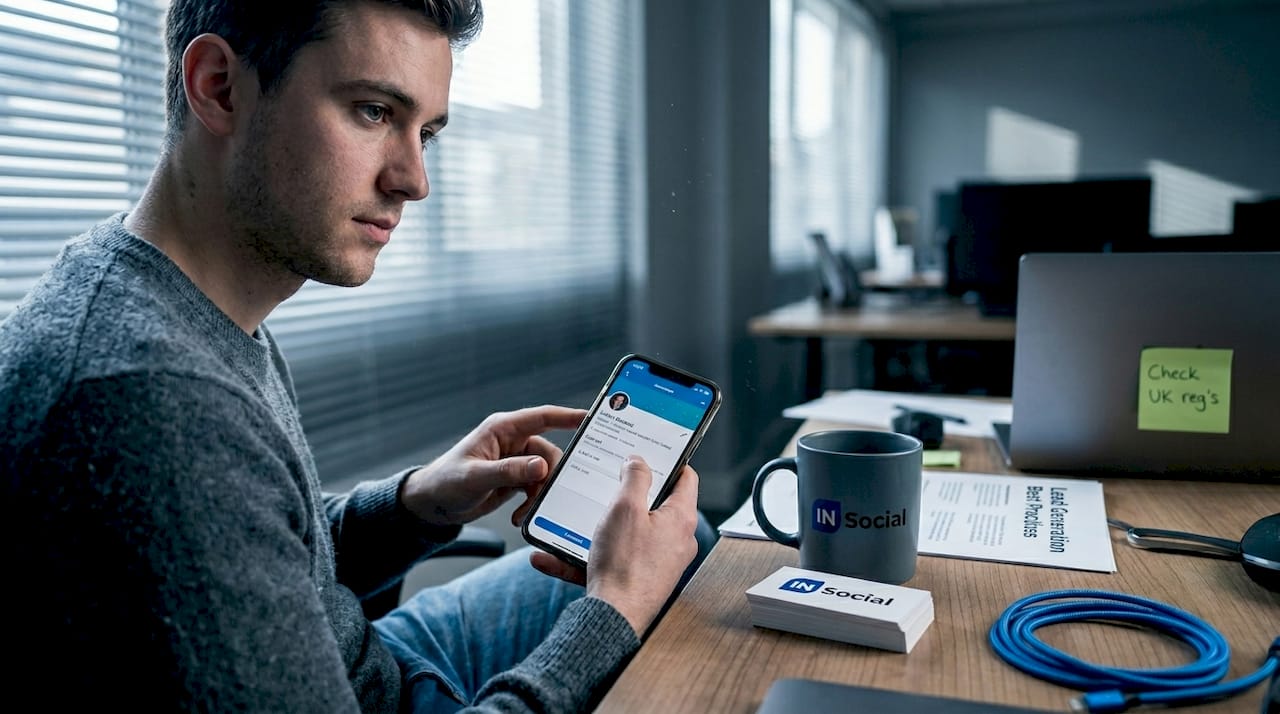
Simple, no-pitch connection requests achieve a 30 to 35% acceptance rate for small and medium-sized businesses, which is a solid foundation for lead generation. Here is what a strong, context-driven connection request looks like in practice.
Example 1: Referencing a post they wrote or commented on
"Hi [Name], I came across your comment on [Topic] post in the [Group/Feed] and it really resonated. We work with similar challenges at our end. Would love to connect and follow your thinking."
Example 2: Shared group or community
"Hi [Name], I noticed we're both members of [Group Name]. Your background in [Field] looks really relevant to conversations I'm having at the moment. Happy to connect."
Example 3: Job change trigger
"Hi [Name], congratulations on the new role at [Company]. I work with [Function] teams going through similar transitions. Would be great to connect."
What makes each of these work? They are short, specific, and low-commitment. The prospect does not feel pressured. They feel noticed. That distinction matters enormously.
Here are the most common mistakes that kill connection request acceptance rates:
- Including a product pitch or a link in the first message
- Using overly formal language that feels copied from a template
- Writing more than 300 characters, which risks being cut off on mobile
- Sending requests with no personalisation note at all
- Mentioning your company before asking anything about theirs
The psychology here is straightforward. Curiosity and low commitment drive acceptance. When your message is brief, genuine, and clearly written for that specific person, you reduce friction and raise the likelihood they click "Accept."
Pro Tip: Reference something from the lead generation best practices playbook and keep your connection note under 300 characters. Mention a mutual benefit or genuine shared interest, never your product.
Effective follow-up messages and InMail outreach
Making the initial connection is only the beginning. The real work starts in the follow-up. Most replies on LinkedIn do not come from the first message. Follow-up messages account for 50 to 70% of total replies, which means if you stop after one touchpoint, you are leaving most of your pipeline on the table.
A well-structured follow-up sequence for B2B outreach typically looks like this:
- Message 1 (Day 1 after connection accepted): A brief, warm opener. Thank them for connecting and ask a relevant, open-ended question about their current priorities. No pitch. No links.
- Message 2 (Day 4 to 5): A gentle bump. Reference something recent from their profile or activity. Add a short piece of value, such as a stat, an observation, or a question that is directly relevant to their role.
- Message 3 (Day 8 to 10): Share something genuinely useful. A short case study, a relevant article you wrote, or a question about a challenge they have publicly mentioned. This is where your credibility builds.
- Message 4 (Day 14): A direct, friendly ask. Keep it simple. "Would it make sense to have a quick 15-minute call to explore whether there's a fit?" Not pushy. Just clear.
Now, how does InMail fit into this? InMail allows you to message prospects outside your network, which makes it a powerful tool when your connection requests are not being accepted. InMail typically yields an 18 to 25% response rate, which is competitive, but it works best when the message feels just as personal as a direct DM.
Here is a comparison of the three main LinkedIn outreach formats:
| Method | Typical response rate | Best use case | Key limitation |
|---|---|---|---|
| Connection request | 40 to 60% acceptance | First contact, ICP building | Requires acceptance before messaging |
| Direct DM | 10 to 25% reply rate | Warm follow-ups, relationships | Only works within your network |
| InMail | 18 to 25% reply rate | Cold outreach, senior prospects | Requires LinkedIn Premium or Sales Nav |
The timing and tone of your messages matter just as much as the words. Sending messages on Tuesday, Wednesday, or Thursday between 8am and 10am tends to outperform other windows for B2B audiences. Avoid Friday afternoons and weekends entirely.
Your messaging strategy should also consider whether to use outreach automation tools for sequencing, which can help you maintain consistency without spending hours in your inbox each day.
Pro Tip: Open every follow-up message with a question, not a statement. Questions signal genuine interest and invite a response. Statements signal that you are there to sell.
Outreach scenarios: which approach fits your goal?
Not every outreach method works for every objective. Matching your approach to your desired outcome is one of the most underrated skills in B2B sales. Here is a practical guide to which LinkedIn outreach method best fits different goals.
| Goal | Recommended method | Why it works |
|---|---|---|
| Book discovery calls | Personalised DM sequence | Builds trust before the ask |
| Grow a targeted connection base | Connection requests with context notes | Low friction, scalable |
| Re-engage cold prospects | InMail with value-led opener | Bypasses network limits |
| Drive content engagement | Comment engagement, then DM | Warms the lead before outreach |
| Qualify for product fit | Multi-step DM sequence with questions | Uncovers needs before pitching |
| Build referral relationships | Connection request plus value exchange | Long-term, low-pressure approach |
SMB sales managers should aim for a 30 to 45% connection acceptance rate, a 10 to 15% DM reply rate, and two to five booked calls per week from strategic outreach. If you are consistently hitting these numbers, your approach is working. If not, the table above helps you diagnose where the gap is.
Here are the situations where each outreach style excels:
- Use personalised, single-step messages when your target list is highly specific and you have enough context to make each message feel bespoke.
- Use multi-step sequences when you are working a larger prospect list and need a repeatable system that keeps generating replies over time.
- Use InMail when your targets are senior decision-makers who are unlikely to accept connection requests from unknown contacts.
- Use content engagement as a warm-up when your targets are active on LinkedIn and you want to establish familiarity before reaching out directly.
For more context on how to align your outreach with inbound activity, the inbound strategy tips on building a content-led funnel complement outreach perfectly. When prospects already know your name from your posts, your cold outreach suddenly feels much warmer.
What most LinkedIn outreach guides miss
Here is what we have seen repeatedly in B2B sales, across hundreds of outreach campaigns: the approach that generates the best results is rarely the cleverest one. It is the most curious one.
Most LinkedIn outreach guides focus on templates, sequences, and timing hacks. What they rarely address is the damage that mass, impersonal outreach does to your personal brand and your company's reputation. When you send the same message to 500 people in a week, some of them will know each other. Some of them will screenshot your message and share it. The perception you create matters long after that campaign ends.
DMs that start with questions and leads sourced from comment sections consistently outperform generic sequences. The reason is simple. Context creates credibility. When your message references something real and specific about that person, it signals that you have paid attention. That signal alone sets you apart from 90% of the outreach they receive.
The sustainable outreach model we recommend is built on these principles:
- Respond to content before reaching out. Leave a genuine comment on a prospect's post before you send a DM. You are already on their radar.
- Use recent context as your opener. A job change, a company announcement, or a comment they left elsewhere is worth more than any script.
- Ask before you tell. Lead with curiosity about their situation before you introduce your solution.
- Think in relationships, not transactions. The B2B buyer who replies to your message today may not be ready to buy for six months. Stay on their radar without being intrusive.
A simple question outperforms a clever script. Every time. It is not about being less strategic. It is about being more human. The best content-driven outreach blends your personal brand with targeted, warm messages that feel earned rather than forced.
The uncomfortable truth is that most LinkedIn outreach "hacks" erode the very trust they are trying to build. Speed matters, but not at the cost of relevance. Slow down, personalise deliberately, and your reply rates will tell you the difference.
Supercharge your LinkedIn outreach with expert support
Putting these outreach methods into practice consistently is where most sales teams struggle. Knowing what works is one thing. Building a repeatable, scalable system that keeps generating qualified conversations week after week is another challenge entirely.
At in-social.co.uk, we combine human expertise with advanced tools to build LinkedIn outreach strategies that deliver measurable results. From personalised connection request campaigns to fully managed DM sequences, we handle the heavy lifting so your sales team can focus on closing. Whether you need a done-for-you LinkedIn outreach solution or a bespoke strategy built around your ideal customer profile, we can help. Visit our B2B LinkedIn strategy hub to explore how we work and take the next step towards a pipeline that performs.
Frequently asked questions
What is the best LinkedIn outreach message format for B2B sales?
A short, personalised message that references real context and ends with a question works best. Starting DMs with questions rather than pitches significantly increases the likelihood of a reply.
How do follow-up messages increase LinkedIn reply rates?
Consistent follow-up is essential because 50 to 70% of replies come from subsequent messages rather than the initial outreach. A structured sequence of two to four messages dramatically improves your overall response rate.
Should I use LinkedIn InMail or direct DM for outreach?
InMail is best for reaching prospects outside your network and delivers an 18 to 25% response rate, while personalised DMs achieve similar performance with connections already in your network.
What is a good acceptance rate for LinkedIn connection requests?
A well-targeted, personalised outreach campaign should achieve a 30 to 45% acceptance rate for B2B sales managers reaching their ideal customer profile.