

LinkedIn generates 277% more B2B leads than Facebook, Twitter, or Instagram combined. For sales professionals targeting business decision makers, this isn't just impressive. It's game changing. This article reveals how to leverage LinkedIn's unique professional ecosystem to fill your pipeline with qualified prospects, boost your quota attainment, and build lasting client relationships that drive revenue growth.
Table of Contents
- Introduction to LinkedIn as a B2B Sales Platform
- Core Features of LinkedIn That Drive Sales Success
- Why Relationship Building on LinkedIn Matters for Sales
- Common Misconceptions and Pitfalls When Using LinkedIn for Sales
- Comparing LinkedIn With Other Sales and Lead Generation Platforms
- Practical Steps to Maximize Sales Using LinkedIn
- Boost Your LinkedIn Sales with IN Social
- Frequently Asked Questions About Using LinkedIn for Sales
Key Takeaways
| Point | Details |
|---|---|
| LinkedIn dominates B2B lead generation | The platform delivers 277% more leads than other social networks, making it essential for B2B sales teams. |
| Sales Navigator drives quota success | Sales professionals using LinkedIn tools achieve 45% higher quota attainment through precision targeting. |
| Relationship building increases responses | Authentic engagement on LinkedIn boosts message response rates by up to 50% compared to cold outreach. |
| Analytics optimize campaign performance | LinkedIn's built-in analytics improve conversion rates by 30% when used to refine messaging strategies. |
| Professional focus prevents common mistakes | Understanding LinkedIn as a business platform, not a casual social network, is critical for sales success. |
Introduction to LinkedIn as a B2B Sales Platform
LinkedIn's 900 million users include the exact people you need to reach. CEOs, procurement managers, department heads, and decision makers all maintain active profiles. Unlike consumer focused platforms, LinkedIn's professional environment creates natural opportunities for business conversations.
The numbers prove this advantage translates to real sales outcomes. Sales reps using LinkedIn social selling have 45% higher quota attainment than peers who rely solely on traditional methods. That statistic alone should reshape your prospecting strategy.
Why does LinkedIn work so well for B2B? Three factors drive its effectiveness. First, users expect professional interactions and business conversations. Second, detailed profile information lets you qualify prospects before reaching out. Third, the platform's data-driven targeting capabilities enable precise audience segmentation impossible on other channels.
Consider this scenario. You're selling enterprise software to healthcare companies. On LinkedIn, you can filter by industry, company size, job function, seniority level, and even recent job changes. Then you can see if prospects engage with content about digital transformation or regulatory compliance. This intelligence transforms cold outreach into warm, contextual conversations.
Sales professionals who ignore LinkedIn leave money on the table. The platform houses your entire addressable market, complete with the insights needed to personalize every interaction.
Traditional prospecting methods cast wide nets hoping to catch qualified leads. LinkedIn flips this model. You identify ideal customers first, then engage them with relevant value. This targeting precision explains why 277% more B2B leads originate from LinkedIn versus other social platforms.
Core Features of LinkedIn That Drive Sales Success
LinkedIn provides purpose built tools that amplify sales effectiveness. Sales Navigator tops this list. The premium prospecting tool offers over 20 advanced search filters that let you build highly specific lead lists. Filter by company headcount growth, technologies used, or prospects who changed jobs in the past 90 days.

These filters matter because timing and relevance determine sales success. A CFO who just started at a growing company likely needs new vendors. Sales Navigator identifies these high probability prospects automatically. Recent data shows LinkedIn analytics tools improve campaign hit rates by up to 30% when used to refine targeting and messaging.
Beyond targeting, LinkedIn's communication features accelerate relationship building. InMail messages reach prospects even if you're not connected. Profile views and content engagement signal interest without requiring direct contact. These touch points warm up leads before you pitch.
Essential LinkedIn Features for Sales Teams:
- Sales Navigator's Boolean search for complex prospect filtering
- Lead recommendations based on your ideal customer profile
- Real time alerts when prospects change jobs or get promoted
- Integration with CRM systems to track LinkedIn activity
- Team collaboration tools to coordinate account based selling
Analytics transform these features from useful to essential. Track who views your profile, which content resonates, and how prospects engage with your company page. This intelligence reveals what messaging works and which prospects show buying signals.
| Feature | Primary Benefit | Impact on Sales |
|---|---|---|
| Advanced Filters | Precise prospect targeting | Reduces time wasted on unqualified leads |
| InMail | Direct access to decision makers | Bypasses gatekeepers effectively |
| Profile Analytics | Visibility into prospect research | Identifies hot leads actively evaluating solutions |
| Content Sharing | Thought leadership positioning | Builds credibility before sales conversations |
Pro Tip: Set up saved searches in Sales Navigator for your ideal customer profiles. Check these daily to catch prospects during key trigger events like funding rounds, executive changes, or company expansions. These moments create natural conversation starters.
The combination of Sales Navigator and targeting expertise creates a prospecting engine that continuously feeds qualified leads into your pipeline. Sales teams using these tools systematically outperform those relying on purchased lists or generic outreach.
Why Relationship Building on LinkedIn Matters for Sales
B2B purchases involve risk. Decision makers must trust vendors before signing contracts. LinkedIn's professional context provides unique relationship building opportunities that reduce perceived risk and accelerate sales cycles.
Authentic engagement beats aggressive pitching every time. Comment thoughtfully on prospect posts. Share relevant articles that solve their challenges. Congratulate them on company milestones. These interactions build familiarity and demonstrate genuine interest in their success.
The impact is measurable. Research confirms building relationships increases message response rates by up to 50% compared to cold messages from strangers. That response rate difference determines whether your outreach generates meetings or gets ignored.
Think about your own behavior. When someone you've never met sends a LinkedIn connection request with an immediate sales pitch, you likely decline. But when someone who's engaged with your content reaches out with a personalized message, you probably respond. Your prospects think the same way.
Relationship Building Actions That Drive Sales Results:
- Engage with prospect content for 2 to 3 weeks before sending connection requests
- Personalize connection messages referencing specific posts or shared interests
- Provide value first through helpful resources or introductions
- Use video messages to create stronger personal connections
- Follow up consistently without being pushy or aggressive
LinkedIn relationships extend beyond the initial sale. Stay connected with customers after they buy. Share case studies, industry insights, and product updates. This ongoing engagement creates upsell opportunities and generates referrals to similar companies.
One software sales leader told me her team closes 40% more deals when prospects already follow their LinkedIn content before the first sales call. The prospects arrive pre educated and pre sold on the team's expertise. This relationship building approach fundamentally changes the sales dynamic from convincing skeptics to helping informed buyers.
Pro Tip: Create a 30 day engagement sequence before reaching out to high value prospects. Week one, follow them and like their posts. Week two, leave thoughtful comments. Week three, share their content with your network. Week four, send a personalized connection request. This patience pays off with dramatically higher acceptance and response rates.
Common Misconceptions and Pitfalls When Using LinkedIn for Sales
Many sales teams fail on LinkedIn because they treat it like Facebook or a direct mail campaign. Neither approach works. Understanding what LinkedIn is not matters as much as knowing what it is.
The biggest mistake? Immediately pitching in connection requests. Imagine walking into a networking event, shaking someone's hand, and launching into a sales presentation before learning their name. That's what connection request pitches feel like. Yet over 60% of sales reps misuse LinkedIn this way, leading to poor results.
Another common error is sporadic, inconsistent activity. Sales professionals create profiles, send a few messages, then abandon the platform when instant results don't materialize. LinkedIn sales success requires sustained effort. Think marathon, not sprint.
LinkedIn Sales Mistakes That Kill Results:
- Sending generic connection requests without personalization
- Pitching products immediately after connecting
- Neglecting profile optimization and content sharing
- Failing to engage with prospect content before outreach
- Giving up after a few weeks without results
- Using automation tools that violate LinkedIn's terms of service
Some sales reps also misunderstand LinkedIn's professional culture. They post memes, political opinions, or personal drama. This content damages credibility with business prospects. Your LinkedIn presence should reflect the same professionalism you'd bring to client meetings.
The platform isn't a shortcut around relationship building. It's a tool that makes relationship building more efficient and scalable. You still need to provide value, demonstrate expertise, and earn trust. LinkedIn simply gives you better access to decision makers and more ways to stay top of mind.
Sales leaders often underestimate the learning curve. Effective LinkedIn selling requires understanding content strategy, social selling techniques, and platform specific best practices. Teams that invest in proper training and strategy consistently outperform those who treat LinkedIn as just another prospecting database.
Recognizing these common LinkedIn sales mistakes helps you avoid them. The platform works brilliantly when used correctly. It frustrates when misused.
Comparing LinkedIn With Other Sales and Lead Generation Platforms
No single channel solves all sales challenges. Understanding each platform's strengths and limitations helps you build an effective multi channel strategy. LinkedIn excels where others struggle with B2B targeting and lead quality.
Email marketing reaches large audiences efficiently. Open rates average 20% for sales emails, and nearly everyone checks email daily. However, email lacks the rich profile data and social proof LinkedIn provides. You can't see if email recipients engage with your content or follow your company.
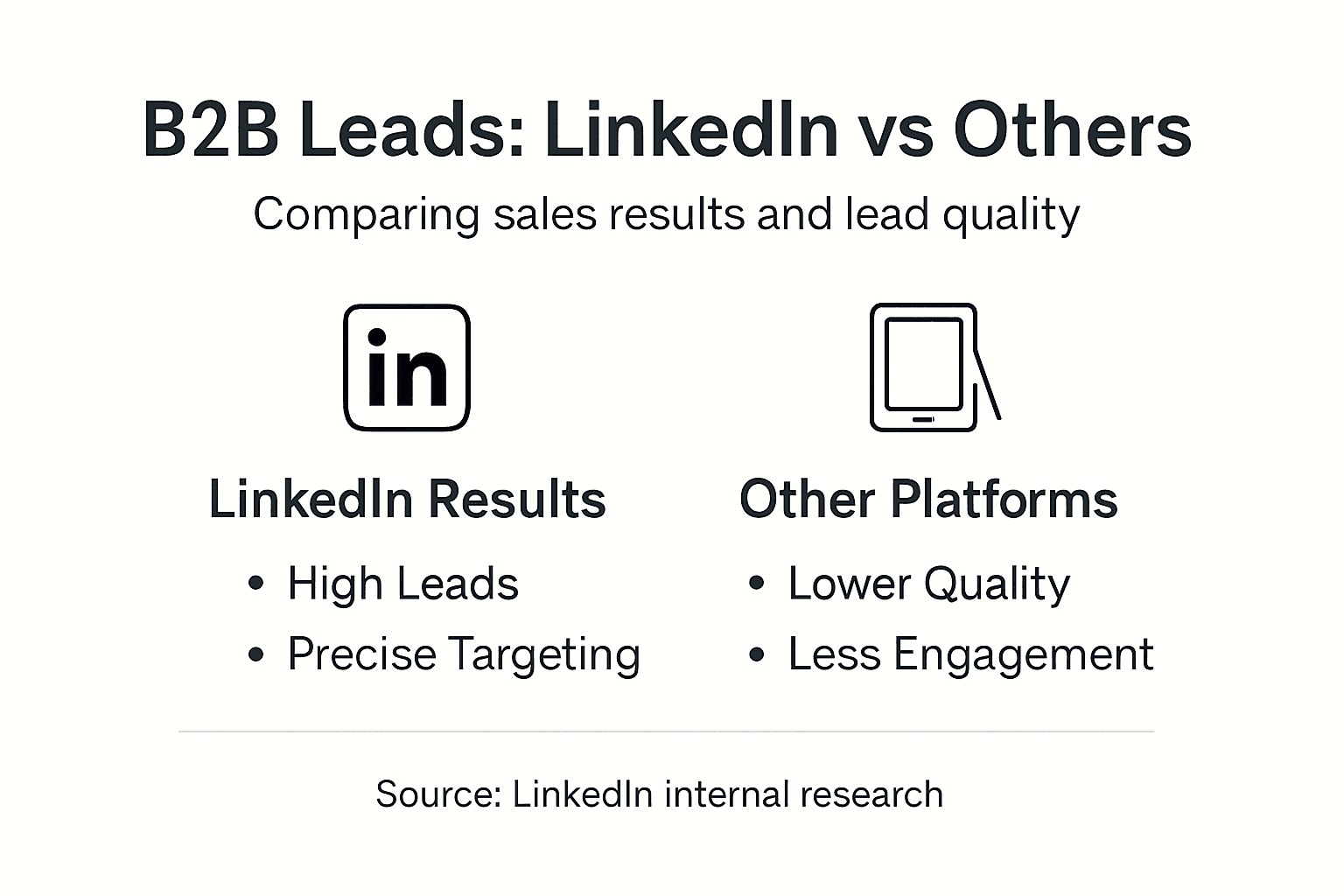
Facebook and Twitter serve different purposes. Facebook's 3 billion users include some business decision makers, but the platform's personal, social focus makes professional outreach feel intrusive. Twitter works for thought leadership and brand awareness but offers limited targeting for complex B2B sales.
| Platform | Best For | Lead Quality | Targeting Precision | Response Rates |
|---|---|---|---|---|
| B2B decision makers | Excellent | Very High | High | |
| Broad reach | Moderate | Medium | Moderate | |
| B2C, local business | Low for B2B | Low for B2B | Low for B2B | |
| Brand awareness | Low | Low | Low | |
| Cold Calling | Urgent outreach | Variable | Medium | Low |
LinkedIn outperforms email and social channels specifically for B2B lead quality and conversion rates. A LinkedIn lead costs more to acquire than an email subscriber, but converts at 3x the rate for enterprise sales.
Consider these platform trade offs:
- Email provides ownership and control but suffers from declining deliverability and engagement
- LinkedIn offers superior targeting and credibility but requires more personalized effort per prospect
- Facebook/Twitter build brand awareness cheaply but rarely generate qualified B2B leads
- Cold calling enables real time conversations but faces increasing resistance from gatekeepers
The winning strategy combines channels strategically. Use LinkedIn to identify and warm up high value prospects. Follow up with personalized emails. Supplement with retargeting ads and content marketing. Each channel plays a specific role in moving prospects through your pipeline.
For B2B companies selling to enterprise clients, LinkedIn should anchor your prospecting strategy. The platform's advantages in targeting precision, professional context, and lead quality justify making it your primary outbound channel. Other platforms then support and amplify your LinkedIn foundation.
Practical Steps to Maximize Sales Using LinkedIn
Understanding LinkedIn's value means nothing without implementation. These actionable steps transform theory into pipeline growth. Start with profile optimization, then build systematic prospecting habits.
Step by Step LinkedIn Sales Process:
-
Optimize your profile for credibility. Use a professional headshot. Write a headline focused on how you help customers, not your job title. Fill the About section with client success stories and specific results you deliver.
-
Define your ideal customer profile precisely. List industries, company sizes, job titles, and geographic regions. The more specific, the better Sales Navigator works.
-
Build targeted prospect lists using Sales Navigator. Use advanced filters to identify 50 to 100 high probability prospects weekly. Save these searches to monitor new matches automatically.
-
Engage before connecting. Follow prospects. Like and comment on their posts for 2 to 3 weeks. Share their content. Build familiarity before sending connection requests.
-
Send personalized connection requests. Reference specific posts, shared connections, or common interests. Never pitch in connection requests. Simply express genuine interest in connecting.
-
Provide value in initial conversations. After connecting, share a relevant article or insight. Ask thoughtful questions about their challenges. Demonstrate expertise without selling.
-
Use analytics to refine your approach. Track which messages get responses. Note which profile elements prospects view. Leveraging Sales Navigator and analytics refines messaging and accelerates sales by revealing what resonates with your audience.
-
Schedule discovery calls through natural conversation. After several valuable exchanges, suggest a call to discuss their specific situation. Frame it as helping them, not selling to them.
Pro Tip: Block 30 minutes daily for LinkedIn activity. Spend 10 minutes engaging with prospect content, 10 minutes sending personalized messages, and 10 minutes sharing valuable content. This consistency compounds into significant pipeline growth over weeks and months.
Consistency beats intensity. Sales reps who spend 30 minutes daily on LinkedIn outperform those who binge for 3 hours monthly. The platform's algorithm rewards regular activity with greater visibility.
Track key metrics to measure progress. Monitor connection acceptance rates, message response rates, and meetings booked from LinkedIn outreach. If acceptance rates drop below 40%, your targeting or messaging needs adjustment. If response rates fall below 20%, add more value before asking for calls.
Many sales teams benefit from partnering with specialists who understand LinkedIn sales strategy implementation. Expert guidance accelerates results and avoids costly mistakes. Whether you build internal expertise or leverage external support, systematic execution matters more than perfect strategy.
These LinkedIn sales optimization tips create repeatable processes that consistently fill your pipeline with qualified opportunities.
Boost Your LinkedIn Sales with IN Social
You now understand why LinkedIn dominates B2B lead generation and how to use it effectively. But knowledge without execution produces zero results. If building and managing a systematic LinkedIn sales campaign feels overwhelming alongside your existing responsibilities, you're not alone.
IN Social specializes in turning LinkedIn's potential into pipeline reality. We combine proven data-driven LinkedIn sales strategies with hands on campaign management. Our team handles everything from profile optimization and content creation to targeted outreach and relationship nurturing. You focus on closing deals while we fill your calendar with qualified prospects.
Our clients typically see measurable pipeline growth within 60 days. We leverage the same advanced targeting, analytics, and engagement strategies covered in this article. The difference? We execute them consistently with expertise refined across hundreds of successful campaigns. Discover how our LinkedIn lead generation services can transform your sales results. Visit our LinkedIn sales solutions page to learn more about our approach and results.
Frequently Asked Questions About Using LinkedIn for Sales
Why is LinkedIn better than other social platforms for B2B sales?
LinkedIn's user base consists primarily of business professionals and decision makers actively networking. The platform's targeting tools let you filter by job title, company size, industry, and other business criteria impossible on consumer platforms. This precision dramatically improves lead quality.
How long does it take to see sales results from LinkedIn?
Most sales professionals see initial responses within 2 to 3 weeks of consistent activity. Meaningful pipeline growth typically appears after 60 to 90 days. LinkedIn requires patience and systematic effort, but the compounding returns justify the investment.
Should I use LinkedIn automation tools to scale outreach?
Most automation tools violate LinkedIn's terms of service and risk account restrictions. More importantly, they produce generic outreach that prospects ignore. Manual, personalized engagement consistently outperforms automated mass messaging for quality and compliance.
What's the difference between free LinkedIn and Sales Navigator?
Free LinkedIn limits search filters and monthly InMail messages. Sales Navigator provides 20+ advanced search filters, unlimited saved searches, lead recommendations, and significantly more InMail credits. For serious B2B sales efforts, Sales Navigator's ROI justifies the investment.
How often should I post content on LinkedIn for sales success?
Post valuable content 2 to 3 times weekly minimum. Consistency matters more than frequency. Focus on insights that help your target audience solve problems. Mix original posts with curated content that demonstrates your industry expertise and thought leadership.
Can LinkedIn replace cold calling and email for sales prospecting?
LinkedIn works best as part of a multi channel strategy. Use it to identify and warm prospects, then follow up via email or phone. The platform excels at research and relationship building, making your other outreach channels more effective when used together.