

Many marketing managers still see LinkedIn as just another professional networking site, a digital rolodex where connections gather dust. This misconception costs businesses thousands in missed opportunities every month. LinkedIn has evolved into the most powerful B2B sales engine available, offering direct access to decision makers and proven lead generation tools that outperform traditional channels. For small to medium sized companies looking to scale their sales pipeline in 2026, understanding how to leverage LinkedIn strategically isn't optional anymore. This guide reveals exactly why LinkedIn drives measurable B2B growth and how you can implement proven strategies to transform your lead generation results.
Table of Contents
- Understanding LinkedIn's Power In B2B Lead Generation
- How To Build A Strong LinkedIn Presence For Your Brand
- Engagement Strategies To Convert Connections Into Sales
- Leveraging LinkedIn Analytics To Refine Your B2B Strategy
- Discover Expert LinkedIn Marketing Services To Boost Your B2B Growth
- Why Use LinkedIn For B2B?
Key takeaways
| Point | Details |
|---|---|
| LinkedIn drives targeted B2B leads effectively | The platform delivers 25% more qualified leads for UK SMBs compared to other social channels in 2026 |
| Professional branding builds trust and authority | A well optimised LinkedIn presence establishes credibility with buyers before the first conversation |
| Engagement strategies convert connections into sales | Consistent, valuable content and personalised outreach nurture prospects through the sales funnel |
| Analytics refine your sales efforts | LinkedIn's data tools reveal which tactics generate results, allowing continuous strategy optimisation |
Understanding LinkedIn's power in B2B lead generation
LinkedIn's architecture fundamentally differs from consumer focused social platforms. Every user arrives with professional intent, creating an environment where business conversations feel natural rather than intrusive. This business first mindset transforms how B2B companies approach prospecting.
The platform houses over 900 million professionals globally, with decision makers actively seeking solutions to business challenges. Unlike Facebook or Instagram where users scroll for entertainment, LinkedIn members engage to learn, network, and solve work problems. This context makes your outreach welcomed rather than dismissed as spam.
Why LinkedIn drives 25% more B2B leads for UK SMBs in 2026 demonstrates measurable advantages for small to medium businesses. The data reveals that targeted LinkedIn campaigns consistently outperform email marketing and traditional advertising for B2B acquisition.
Access to decision makers sets LinkedIn apart from every other platform. You can identify and message the exact person who signs contracts at your ideal client companies. Advanced search filters let you narrow prospects by job title, company size, industry, and location. This precision targeting eliminates wasted effort on unqualified leads.
LinkedIn provides multiple lead generation pathways:
- Direct messaging to warm prospects who match your ideal customer profile
- Content marketing that positions your expertise in front of relevant audiences
- Company pages that serve as credible landing points for interested buyers
- LinkedIn Sales Navigator for advanced prospecting and relationship tracking
- Sponsored content and InMail campaigns for scaled outreach
The benefits of LinkedIn for sales extend beyond simple lead volume. Quality matters more than quantity in B2B sales cycles. LinkedIn connections typically convert at higher rates because they're already qualified by professional context. Someone engaging with your content about manufacturing software likely works in manufacturing and faces relevant challenges.
"LinkedIn isn't just another marketing channel. It's where B2B buying decisions begin, with 80% of leads coming from the platform for many companies."
The platform's professional environment also builds trust faster. When prospects see your company page, employee profiles, recommendations, and thought leadership content all aligned, credibility compounds. This social proof accelerates sales conversations that might take months through cold outreach.
How to build a strong LinkedIn presence for your brand
Your LinkedIn profile serves as your digital storefront in the B2B marketplace. Buyers research you before responding to outreach or taking calls. A weak profile kills opportunities before conversations start.
Optimising your personal profile requires strategic thinking:
- Write a headline that clearly states who you help and how, not just your job title
- Craft a summary that addresses your target audience's pain points and positions your expertise
- Include relevant keywords naturally throughout your profile for LinkedIn search visibility
- Add rich media like presentations, case studies, and videos to showcase your work
- Request recommendations from clients and colleagues to build social proof
- Keep your experience section focused on achievements and results, not just responsibilities
Your company page deserves equal attention. This hub represents your brand to thousands of potential buyers researching solutions. Post consistently with content that educates rather than just promotes. Share industry insights, customer success stories, and practical advice that demonstrates expertise.

Building a professional brand on LinkedIn increases trust and authority, creating a foundation for all your sales activities. When prospects encounter your brand multiple times through different touchpoints, familiarity breeds confidence. They're more likely to respond positively when you reach out.
Consistent messaging across all LinkedIn touchpoints reinforces your positioning. If your profile emphasises helping manufacturers reduce costs but your company page focuses on technology innovation, confusion dilutes impact. Align every element around your core value proposition.
Visual elements matter more than most marketers realise. Professional headshots, branded banners, and well designed featured content catch attention in crowded feeds. Invest in quality imagery that reflects your brand standards.
Pro Tip: Update your profile keywords quarterly based on the language your ideal clients use when describing their challenges, not just industry jargon you prefer.
Employee advocacy multiplies your reach exponentially. When team members share company content and engage with prospects, your brand appears in far more feeds. Encourage staff to maintain active, professional profiles that reflect well on your organisation. Their networks become extensions of your marketing reach.
The LinkedIn branding for B2B approach differs from consumer marketing. You're building authority and trust with sophisticated buyers who research thoroughly before engaging. Every profile element should answer the question: why should this prospect trust us with their business challenge?
Engagement strategies to convert connections into sales
Connecting with prospects means nothing without meaningful engagement. Your network's value lies in the relationships you nurture, not the connection count displayed on your profile.
Content creation drives sustainable engagement. Share insights that help your target audience solve problems, even when those solutions don't directly involve your products. This generosity builds goodwill and positions you as a trusted resource. When prospects need what you sell, you'll be top of mind.
Effective LinkedIn content addresses specific pain points:
- Industry trends that impact your audience's business results
- Practical frameworks or processes they can implement immediately
- Case studies showing how similar companies overcame relevant challenges
- Data driven insights that inform better decision making
- Thought provoking questions that spark valuable discussions
Personalised outreach converts far better than generic templates. Reference specific details from a prospect's profile or recent activity. Explain why you're reaching out to them specifically. Offer value before asking for anything. This approach respects their time and demonstrates genuine interest.
Effective engagement and content strategies improve lead conversion by building relationships before pitching. The best salespeople on LinkedIn spend months providing value through comments, shares, and helpful messages before ever mentioning their services.
LinkedIn groups offer concentrated access to your target audience. Join groups where your ideal clients gather, then contribute meaningfully to discussions. Answer questions, share relevant resources, and build visibility as a helpful expert. Avoid overt selling in group contexts.
| Content type | Engagement impact | Best use case |
|---|---|---|
| Industry insights | High shares, moderate comments | Building thought leadership and reach |
| How to guides | Moderate shares, high saves | Demonstrating expertise and providing value |
| Case studies | Low shares, high direct messages | Converting warm prospects into sales conversations |
| Questions and polls | Very high comments, low shares | Sparking discussions and understanding audience needs |
| Personal stories | High engagement across metrics | Building authentic connections and trust |
Consistency matters more than perfection. Posting valuable content twice weekly outperforms sporadic bursts of daily activity. Your audience learns when to expect insights from you, creating anticipation and routine engagement.
Pro Tip: Use storytelling frameworks to make your posts memorable, starting with a relatable challenge, showing the journey to solution, and ending with a clear takeaway your audience can apply.
The LinkedIn engagement strategies that work best in 2026 prioritise authenticity over polish. Buyers connect with real people sharing genuine insights, not corporate speak. Let your personality show while maintaining professionalism. Comment thoughtfully on prospects' posts to stay visible without being pushy.
Follow LinkedIn content best practices to maximise the impact of every post. Format for mobile readability, use line breaks generously, and front load value in the first two lines before the "see more" cut off.
Leveraging LinkedIn analytics to refine your B2B strategy
Guesswork wastes marketing budgets. LinkedIn's analytics tools reveal exactly what's working and what's draining resources without returns. Smart marketers let data guide their strategy evolution.
Track engagement metrics across all your content. Which posts generate the most comments, shares, and profile views? These signals indicate topics that resonate with your audience. Double down on what works, refine or abandon what doesn't.
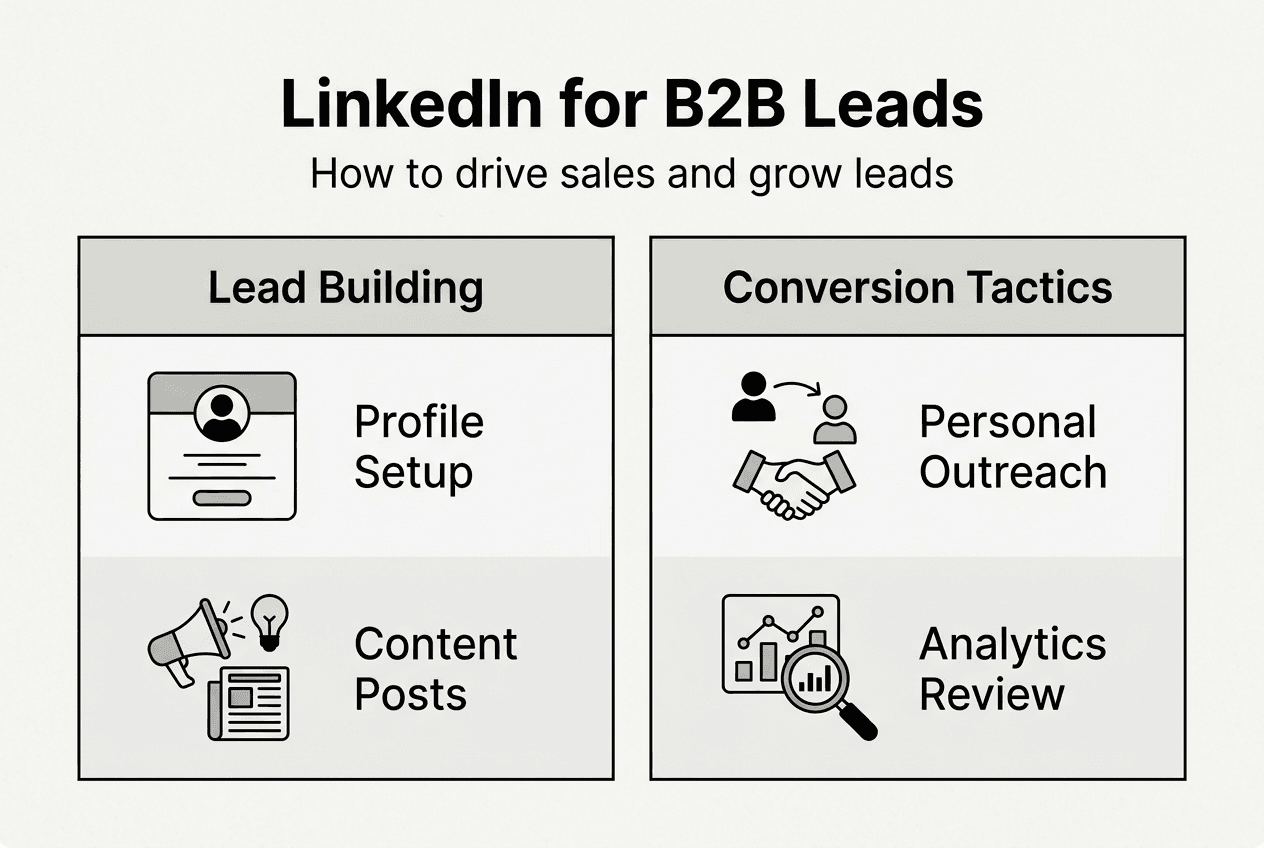
Harnessing LinkedIn analytics enhances B2B sales success by transforming gut feelings into evidence based decisions. When you know that Tuesday morning posts get 40% more engagement than Friday afternoons, you schedule accordingly. When case studies drive three times more sales conversations than product announcements, you create more case studies.
Key performance indicators worth monitoring:
- Profile views and search appearances indicate growing visibility
- Post impressions show how many people see your content
- Engagement rate reveals how compelling your audience finds each post
- Click through rates on shared links measure content effectiveness
- Connection acceptance rates reflect outreach message quality
- InMail response rates guide personalisation improvements
LinkedIn's native analytics dashboard provides company page insights and individual post performance data. Sales Navigator adds prospect engagement tracking, showing who views your profile and interacts with your content. These warm signals identify sales ready leads.
| Key metric | What it measures | How to improve it |
|---|---|---|
| Engagement rate | Content relevance and value | Test different topics, formats, and posting times |
| Profile views | Personal brand visibility | Increase content frequency and comment on others' posts |
| Connection acceptance | Outreach message effectiveness | Personalise invitations and explain mutual value |
| Click through rate | Call to action strength | Clarify value proposition and use compelling hooks |
| Lead conversion | Overall strategy effectiveness | Align content with buyer journey stages |
Adjust your posting schedule based on when your specific audience is active. LinkedIn analytics shows peak engagement windows for your followers. Generic advice about optimal posting times means nothing if your audience behaves differently.
Content performance patterns emerge over time. You might discover that tactical how to posts outperform strategic think pieces, or vice versa. Perhaps your audience engages more with video than text. Let these insights shape your content calendar.
The LinkedIn analytics for B2B approach requires monthly reviews at minimum. Set aside time to analyse what the data reveals about your audience's preferences and behaviours. Look for trends across multiple posts rather than overreacting to single data points.
A/B testing accelerates learning. Try different headlines, opening hooks, content lengths, and calls to action. Compare performance to identify winning formulas. Small improvements compound into significant advantages over competitors who post randomly.
Attribute revenue to LinkedIn activities whenever possible. Track which leads originated from the platform and their progression through your sales funnel. Calculate customer acquisition costs for LinkedIn versus other channels. This financial view justifies continued investment and reveals ROI.
Discover expert LinkedIn marketing services to boost your B2B growth
Implementing these strategies consistently whilst managing daily business demands challenges even the most organised teams. Many successful companies accelerate results by partnering with specialists who live and breathe LinkedIn marketing.
Professional managed LinkedIn services handle everything from profile optimisation to content creation and prospect engagement. Expert teams bring proven frameworks, avoiding the costly trial and error that drains internal resources. They've already tested what works across hundreds of B2B campaigns.
For small to medium businesses, outsourcing LinkedIn management often costs less than hiring a dedicated internal resource whilst delivering superior results. Agencies specialising in B2B lead generation understand the nuances that separate effective outreach from spam. They craft personalised campaigns that respect your prospects whilst driving measurable pipeline growth.
IN Social's marketing services combine human expertise with advanced tools to maximise your LinkedIn ROI. Whether you need comprehensive management or targeted support for specific initiatives, professional guidance ensures your LinkedIn presence generates the leads and sales your business requires to thrive in 2026.
Why use LinkedIn for b2b?
What makes LinkedIn crucial for B2B lead generation?
LinkedIn provides direct access to decision makers actively seeking business solutions, unlike consumer platforms where professional outreach feels intrusive. The platform's targeting capabilities and professional context create an environment where B2B conversations convert at significantly higher rates than traditional channels.
How often should I post on LinkedIn for best results?
Consistency matters more than frequency. Posting two to three times weekly with valuable, relevant content outperforms daily posts lacking substance. Your audience needs time to engage with each piece, and quality always trumps quantity in B2B contexts where you're building authority.
Can LinkedIn replace other B2B marketing channels?
LinkedIn works best as part of an integrated strategy rather than a complete replacement. Whilst it excels at relationship building and lead generation, combining LinkedIn with email nurturing, content marketing, and targeted advertising creates multiple touchpoints that accelerate buyer journeys and improve conversion rates.
How do I measure LinkedIn ROI effectively?
Track leads generated through LinkedIn connections and content, then follow them through your sales funnel to closed revenue. Compare customer acquisition costs against other channels. Monitor engagement metrics like profile views and post interactions as leading indicators of growing brand awareness that eventually converts to sales opportunities. The LinkedIn sales lead benefits become clear when you attribute actual revenue to platform activities.