

LinkedIn drives 80% of B2B social media leads, yet many SMEs still post inconsistently or lack a formal content strategy. For small to medium-sized businesses and entrepreneurs, creating strategic LinkedIn content transforms visibility into measurable lead generation and lasting brand authority. This article explores why LinkedIn content matters, how consistency multiplies results, and practical frameworks to align your content with business growth goals.
Table of Contents
- How LinkedIn content drives lead generation
- The role of consistency in LinkedIn content creation
- Framework for effective LinkedIn content strategy
- Why thought leadership on LinkedIn matters
- Common misconceptions about LinkedIn content value
- Conclusion: turning LinkedIn content into business growth
- Enhance your LinkedIn content strategy with IN Social
- Frequently asked questions
Key takeaways
| Point | Details |
|---|---|
| LinkedIn content drives qualified B2B leads | Strategic content on LinkedIn generates higher conversion rates than traditional paid advertising whilst building professional trust. |
| Consistency multiplies visibility and engagement | Posting 3-5 times weekly significantly increases inbound enquiries and profile views through algorithmic amplification. |
| Thought leadership establishes buyer trust | Developing expertise through content influences purchase decisions and improves lead pipeline quality. |
| Quality content aligns with audience needs | Effective LinkedIn posts address specific pain points using professional tone and actionable insights. |
How LinkedIn content drives lead generation
LinkedIn content works fundamentally differently from cold outreach or traditional advertising. When you publish valuable insights, case studies, or educational posts, you build professional credibility before prospects ever speak with you. This trust becomes the foundation for relationship-driven social selling that characterises successful B2B transactions on the platform.
Authentic content triggers LinkedIn's algorithm to amplify your visibility. Each engagement signals relevance, pushing your posts to extended networks and generating inbound enquiries from decision-makers actively seeking solutions. Content marketing on LinkedIn delivers three times higher conversion rates than paid ads in B2B contexts, making it a high-ROI channel for SMEs.
Quality directly correlates with lead quality. Thoughtful posts attract serious prospects who've already engaged with your expertise, whilst superficial content draws casual browsers. Your LinkedIn content strategy should prioritise substantive value over volume.
Consider these core mechanisms:
- Professional trust develops through consistent demonstration of expertise
- Algorithmic reach expands as engagement increases on quality posts
- Authentic storytelling differentiates you from competitors using generic messaging
- Long-term relationship building replaces transactional cold pitches
Pro Tip: Focus on solving one specific problem per post rather than covering broad topics superficially. Prospects remember practical solutions they can immediately apply.
Successful LinkedIn content doesn't just generate leads; it pre-qualifies them. When prospects arrive already familiar with your methodology and values, sales conversations start from a position of established credibility. This dynamic makes LinkedIn lead generation particularly effective for B2B sales cycles requiring sustained trust-building.
The role of consistency in LinkedIn content creation
Consistency transforms LinkedIn from a sporadic visibility channel into a predictable lead generation engine. Posting 3-5 times per week multiplies profile views and inbound leads significantly, creating sustained algorithmic momentum that irregular posting never achieves.

LinkedIn's algorithm rewards regular contributors by prioritising their content in followers' feeds and suggesting it to similar professionals. When you disappear for weeks, you lose this accumulated advantage and must rebuild visibility from scratch. Your network forgets you exist, and the platform stops promoting your sporadic posts.
Balancing frequency with quality remains critical. Posting daily with thin content damages credibility faster than posting weekly with substantive insights. The ideal LinkedIn content strategy workflow maintains both consistent presence and meaningful value.
Consider these frequency dynamics:
- Three to five weekly posts optimise visibility without overwhelming your network
- Consistent timing trains your audience to expect and engage with content
- Regular publishing builds algorithmic trust and expanded organic reach
- Quality posts spaced appropriately outperform daily generic updates
Pro Tip: Batch-create content monthly to maintain consistency even during busy periods. This prevents gaps that reset your algorithmic momentum.
| Posting frequency | Typical engagement impact | Lead generation effect |
|---|---|---|
| 1-2 times weekly | Moderate, inconsistent reach | Sporadic inbound enquiries |
| 3-5 times weekly | High, sustained visibility | Predictable lead flow |
| Daily or more | Risk of audience fatigue | Diminishing returns possible |
Your publishing schedule should align with when your specific audience is most active whilst remaining sustainable for your business capacity. Forcing unsustainable frequency leads to burnout and abandoned strategies. Start with three quality posts weekly, then scale as content creation becomes systematic.
Consistency also signals professionalism to prospects evaluating you. A regularly updated profile demonstrates commitment and active engagement with your industry, whilst dormant accounts raise questions about business viability. This perception directly influences whether prospects engage with your content and reach out.
Framework for effective LinkedIn content strategy
Successful LinkedIn content follows a structured approach built on four strategic pillars aligned to business objectives and audience needs. SMEs using a structured content framework see a 40% engagement lift compared to ad-hoc posting approaches.
Begin by defining your ideal client profile with precision. Understanding their challenges, information needs, and professional context shapes every content decision. Your posts should address specific pain points they actively experience, not generic industry topics.
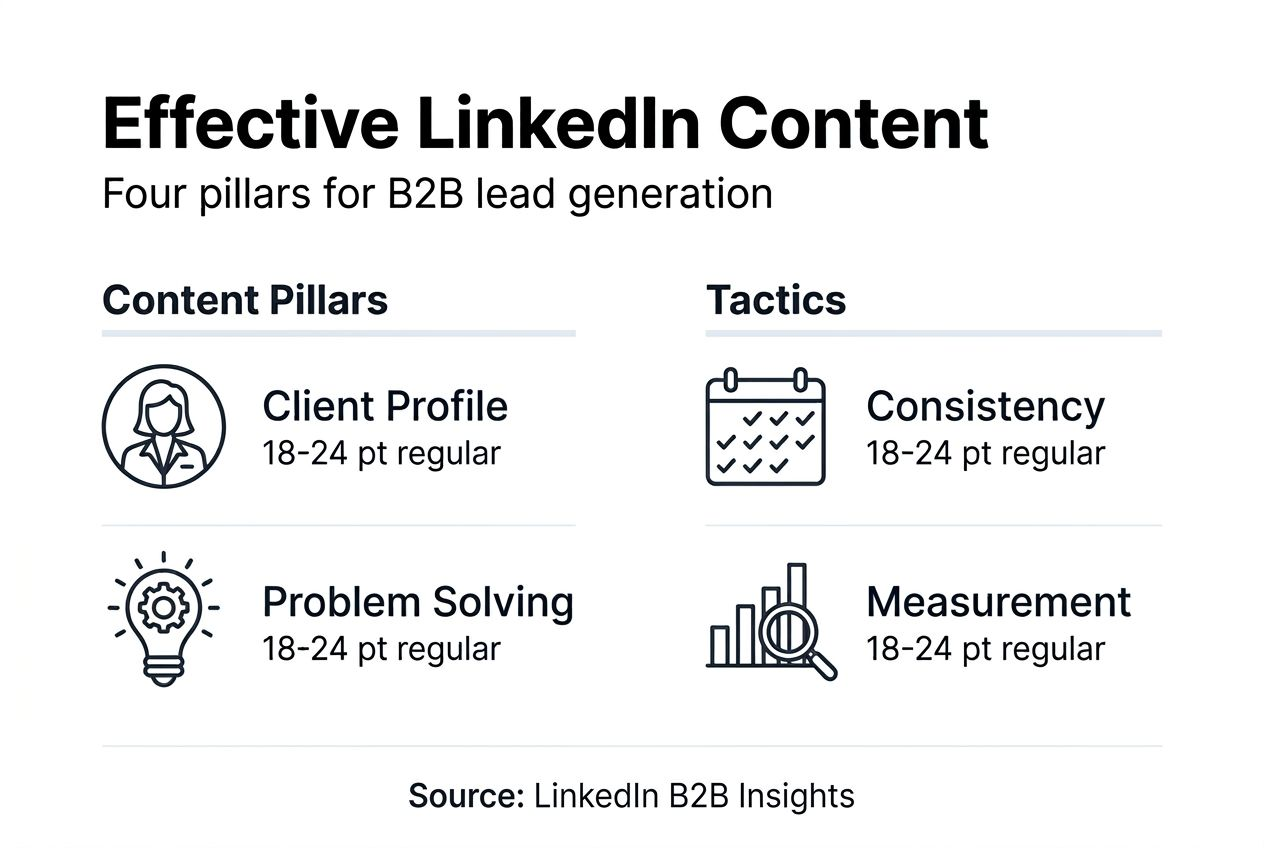
The four content pillars create balanced variety whilst maintaining strategic focus:
| Content pillar | Purpose | Example topics |
|---|---|---|
| Educational | Teach actionable skills | How-to guides, process breakdowns, tool tutorials |
| Inspirational | Motivate and encourage | Success stories, overcoming obstacles, industry trends |
| Personal storytelling | Build authentic connection | Behind-the-scenes, lessons learned, professional journey |
| Industry insights | Establish thought leadership | Market analysis, regulatory changes, expert commentary |
Structure your planning process systematically:
- Identify three to five recurring pain points your audience faces
- Map each pain point to relevant content pillars
- Create monthly themes rotating through all four pillars
- Develop specific post ideas addressing those themes
- Schedule content to maintain 3-5 weekly frequency
- Monitor engagement metrics to refine future topics
This framework ensures you're not randomly posting whatever comes to mind. Each piece serves strategic intent, whether educating prospects, building brand affinity, or demonstrating expertise. The variety prevents audience fatigue whilst the structure maintains focus on business goals.
Pro Tip: Repurpose existing assets like client case studies, training materials, or industry reports into LinkedIn content. This maximises value from work you've already completed.
Your essential LinkedIn content types should include text posts, documents, polls, and occasional video, each serving different engagement purposes. Variety keeps your content fresh whilst reinforcing core messages through multiple formats.
Measure results by tracking profile views, post engagement rates, connection requests from ideal prospects, and direct enquiries attributed to specific content. These metrics reveal which topics and formats resonate most, allowing continuous optimisation of your LinkedIn content strategy.
Why thought leadership on LinkedIn matters
Thought leadership transcends promotional content by establishing you as a trusted authority prospects actively seek out. When decision-makers recognise your expertise before you ever pitch services, sales conversations shift from persuasion to collaborative problem-solving.
Research shows 72% of buyers engage with thought leaders' content prior to purchase decisions. This pre-sales education dramatically shortens sales cycles because prospects arrive already convinced of your capabilities. Thought leadership increases profile visit duration by 60%, giving you more opportunity to convert visitors into connections and leads.
Authentic thought leadership humanises your brand. Whilst competitors share generic industry news, your unique perspectives and experiences create memorable differentiation. Personal insights about challenges you've overcome or lessons learned connect emotionally whilst demonstrating practical expertise.
Key thought leadership benefits include:
- Elevated brand authority that justifies premium positioning
- Improved lead quality from prospects self-selecting based on alignment
- Expanded network reach as valuable content gets shared widely
- Sustained engagement that builds long-term business relationships
Consider this insight from a successful B2B consultant:
"The leads generated from my LinkedIn thought leadership content arrive pre-sold on our methodology. Instead of explaining why our approach works, we discuss implementation specifics. It's transformed our sales process entirely."
Pro Tip: Share contrarian viewpoints or challenge conventional wisdom when you genuinely disagree. Thoughtful controversy sparks conversation and positions you as an independent thinker.
Developing thought leadership requires consistent commitment to adding genuine value. Surface-level observations or recycled industry platitudes won't establish authority. You must share proprietary frameworks, hard-won insights, or data-driven perspectives others cannot easily replicate.
Your thought leadership should connect directly to the benefits of LinkedIn for sales by addressing challenges your ideal clients face. When prospects see you understand their world deeply, they naturally gravitate towards your solutions.
Common misconceptions about LinkedIn content value
Many SMEs hold misunderstandings about LinkedIn content that prevent effective implementation. Addressing these misconceptions helps set realistic expectations and avoid common pitfalls that undermine results.
First, posting frequency alone guarantees nothing without relevance and quality. Three weekly posts addressing your audience's actual needs outperform daily generic updates every time. Algorithm optimisation matters less than creating content prospects genuinely want to engage with.
Second, ignoring LinkedIn content means surrendering lead generation opportunities to competitors. The platform's B2B focus makes it uniquely valuable for SMEs, yet many still treat it as optional. Prospects actively research providers on LinkedIn; an inactive or poorly maintained presence damages credibility.
Third, overtly promotional content consistently underperforms. LinkedIn users expect professional insights, not sales pitches disguised as posts. Leading with value builds trust that eventually converts to business, whilst constant promotion triggers immediate disengagement.
Common mistakes to avoid:
- Expecting immediate results from inconsistent posting efforts
- Copying competitor content instead of developing unique perspectives
- Neglecting engagement by posting without responding to comments
- Focusing solely on follower count rather than engagement quality
- Abandoning strategy after initial posts don't generate instant leads
Pro Tip: Review your last ten posts honestly. If more than half are promotional rather than educational, rebalance your content mix towards genuine value-add.
Understanding LinkedIn content best practices helps UK SMBs avoid these pitfalls whilst building sustainable lead generation systems. The platform rewards patience and consistency over quick wins and aggressive selling.
Your content ROI compounds over time as your archive of valuable posts continues attracting prospects months after publication. This evergreen benefit makes LinkedIn content an appreciating asset rather than a depreciating expense like paid advertising.
Conclusion: turning LinkedIn content into business growth
LinkedIn content delivers measurable lead generation and brand authority when approached strategically rather than sporadically. Consistency, quality, and audience alignment transform your profile from a static resume into an active business development channel generating qualified enquiries.
The frameworks outlined here provide practical starting points for SMEs and entrepreneurs ready to leverage LinkedIn's unique B2B advantages. Begin with three weekly posts addressing specific audience pain points, maintain that consistency for at least three months, and refine based on engagement data.
Thought leadership differentiates you from competitors whilst building trust that accelerates sales conversations. Your investment in valuable content compounds over time, creating sustainable competitive advantage that paid advertising cannot replicate. For SMEs seeking predictable growth, strategic LinkedIn content represents one of the highest-ROI channels available in 2026.
Enhance your LinkedIn content strategy with IN Social
Implementing a consistent, strategic LinkedIn content programme requires time and expertise many SMEs struggle to maintain alongside core business operations. That's where professional support accelerates results whilst ensuring quality remains high.
IN Social specialises in managed LinkedIn solutions tailored specifically for B2B companies seeking predictable lead generation. Our team handles content creation, posting schedules, and engagement management so you can focus on closing the enquiries we generate. We align every post with your business goals and audience needs, ensuring consistent quality that builds authority and drives conversions. Explore our services to discover how we transform LinkedIn presence into measurable business growth.
Frequently asked questions
How often should small businesses post LinkedIn content for best results?
Posting consistently 3-5 times per week maximises visibility and inbound leads by maintaining algorithmic momentum. Balance frequency with quality to sustain engagement rather than overwhelming your network with thin content.
What types of content resonate most with LinkedIn's B2B audience?
Educational posts, authentic personal storytelling, and practical industry insights drive the highest engagement amongst B2B professionals. Avoid overtly promotional content to maintain trust and encourage meaningful interaction.
Can LinkedIn content replace paid advertising for lead generation?
Whilst paid ads can accelerate initial reach, content marketing on LinkedIn delivers three times higher conversion rates than paid advertising in B2B contexts. Content builds stronger relationships and trust, resulting in superior lead quality and lower acquisition costs over time.
How long does it take to see results from LinkedIn content?
Most SMEs notice increased profile views and engagement within 4-6 weeks of consistent posting. Meaningful lead generation typically emerges after 8-12 weeks as your content archive grows and algorithmic reach expands.