

Every B2B sales manager knows how quickly LinkedIn opportunities can slip through the cracks if objectives lack clarity. Setting precise LinkedIn goals shapes your strategic direction and helps you engage the right prospects. By combining targeted research, thoughtful content planning, and performance monitoring, you create a process that elevates lead generation and transforms sales development across borders from Canada to Australia, United Kingdom to Singapore.
Table of Contents
- Step 1: Define your LinkedIn objectives
- Step 2: Research and analyse your target audience
- Step 3: Design your content calendar and themes
- Step 4: Create and curate engaging LinkedIn posts
- Step 5: Monitor results and refine your workflow
Quick Summary
| Key Insight | Explanation |
|---|---|
| 1. Define Clear Objectives | Establish specific, measurable goals for LinkedIn to guide your B2B lead generation efforts effectively. |
| 2. Understand Your Audience | Conduct thorough research on target audience characteristics to create content that resonates with their needs. |
| 3. Create a Content Calendar | Develop a strategic calendar to ensure consistent and diverse LinkedIn posts aligned with your business objectives. |
| 4. Focus on Engagement | Craft authentic, value-driven content that encourages conversation and connections within your professional network. |
| 5. Monitor and Adapt | Regularly track performance metrics to refine your strategy, enhancing effectiveness and engagement over time. |
Step 1: Define your LinkedIn objectives
Defining clear objectives is the cornerstone of a successful LinkedIn content strategy for B2B lead generation. Without precise goals, your efforts will scatter like buckshot instead of targeting specific business outcomes.
Start by identifying your primary business aims through a strategic framework. Are you seeking to generate qualified sales leads, establish thought leadership, recruit top talent, or build brand awareness? Each objective requires a nuanced approach. Consider these potential goals:
- Increase qualified lead volume by 25% within six months
- Establish your company's reputation as an industry expert
- Connect with decision-makers in target organisations
- Develop meaningful professional relationships with potential clients
Your objectives should be specific, measurable, and aligned with broader organisational targets. LinkedIn marketing strategies can transform how you approach professional networking and business development.
Carefully document your goals using the SMART criteria - Specific, Measurable, Achievable, Relevant, and Time-bound. This structured approach ensures your LinkedIn content remains focused and purposeful.
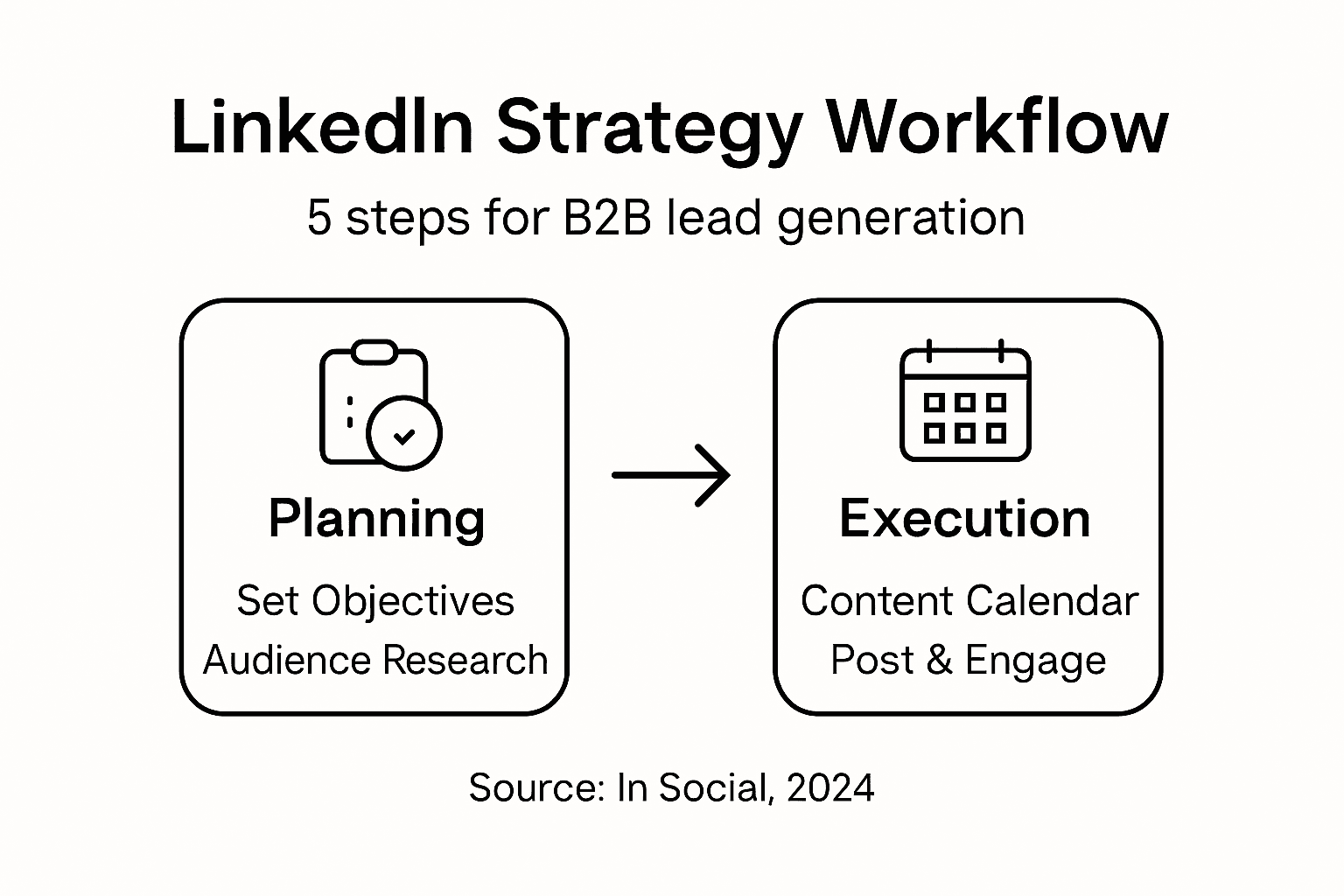
To clarify the SMART framework for setting LinkedIn objectives, here's a summary table of the criteria and their impact:
| SMART Criterion | What It Means | Impact on LinkedIn Strategy |
|---|---|---|
| Specific | Clearly defined outcomes | Targets precise business goals |
| Measurable | Quantifiable targets | Enables progress tracking |
| Achievable | Realistic expectations | Promotes sustainable growth |
| Relevant | Aligns with business aims | Supports organisation objectives |
| Time-bound | Deadline-driven goals | Fosters timely achievement |
Your LinkedIn objectives are the compass guiding your entire content strategy - choose them wisely.
Pro tip: Conduct quarterly reviews of your LinkedIn objectives to ensure they remain relevant and adapt to changing business landscapes.
Step 2: Research and analyse your target audience
Researching and analysing your target audience is a critical foundation for creating an effective LinkedIn content strategy. By deeply understanding your potential clients, you can craft messages that resonate and drive meaningful engagement.
Begin by developing a comprehensive audience profile using both quantitative and qualitative research methods. LinkedIn B2B marketing strategies provide powerful insights into demographic segmentation. Focus on gathering critical information such as:
- Job titles and seniority levels
- Industry sectors and company sizes
- Geographic locations
- Professional challenges and pain points
- Typical career progression patterns
- Communication preferences and content consumption habits
Utilise LinkedIn's advanced search and analytics tools to map out your ideal customer persona. This involves examining detailed professional characteristics that go beyond basic demographics. Look for common connections, shared professional interests, and networking patterns within your target segments.
Understanding your audience is not just about data - it's about uncovering the human stories behind the statistics.
Pro tip: Create a living document of your target audience insights and update it quarterly to maintain relevance and accuracy.
Step 3: Design your content calendar and themes
Creating a strategic content calendar is essential for maintaining consistent and engaging LinkedIn communication. A well-structured approach ensures your content remains purposeful, diverse, and aligned with your business objectives.
LinkedIn content calendar templates provide an excellent framework for systematic content planning. Develop a monthly strategy that incorporates varied content types to keep your audience engaged:
- Industry insights and trend analysis
- Professional storytelling posts
- Educational content and skill-building resources
- Client success narratives
- Thought leadership commentaries
- Interactive engagement prompts
Consider implementing a thematic approach to your content strategy. This might involve dedicating specific weeks to particular themes such as client showcases, expert advice, or emerging industry developments. By rotating content types, you maintain audience interest and demonstrate your comprehensive professional expertise.

Here's a comparison of popular LinkedIn content types and their unique advantages for B2B engagement:
| Content Type | Engagement Potential | Business Benefit |
|---|---|---|
| Industry Insights | Builds credibility | Positions brand as expert |
| Storytelling | Fosters relatability | Deepens audience connection |
| Educational | Encourages interaction | Demonstrates value and expertise |
| Interactive Posts | Sparks conversation | Boosts visibility and follower growth |
A content calendar is your strategic roadmap - it transforms random posting into purposeful communication.
Pro tip: Allocate 20% of your content calendar for spontaneous, timely posts that respond to current industry conversations and breaking news.
Step 4: Create and curate engaging LinkedIn posts
Crafting compelling LinkedIn content requires a strategic approach that balances professionalism with genuine, conversational communication. Your posts should aim to educate, inspire, and create meaningful connections with your professional network.
Creating engaging LinkedIn content demands a nuanced understanding of your audience's professional interests and challenges. Develop a content strategy that incorporates diverse post types:
- Thought leadership insights
- Personal professional stories
- Industry trend analyses
- Problem-solving content
- Interactive polls and questions
- Behind-the-scenes professional glimpses
Focus on creating authentic and value-driven content that speaks directly to your target audience's professional aspirations. This means moving beyond generic posts and developing narratives that showcase your expertise, address specific industry challenges, and provide actionable insights.
Engagement on LinkedIn is about creating conversations, not broadcasting messages.
Pro tip: Aim to respond to every meaningful comment on your posts within 24 hours to foster genuine professional connections.
Step 5: Monitor results and refine your workflow
Maintaining a dynamic and responsive LinkedIn content strategy requires consistent performance tracking and strategic adjustments. Your goal is to transform raw data into actionable insights that continuously improve your lead generation approach.
LinkedIn content strategy monitoring demands a comprehensive approach to analysing key performance metrics. Track these critical indicators to understand your content's effectiveness:
- Engagement rate per post
- Follower growth trajectory
- Impressions and reach
- Click-through rates
- Conversion metrics
- Comment and interaction quality
Review your analytics monthly to identify patterns in high-performing content. Analyse audience responses carefully, looking beyond surface-level metrics to understand the underlying professional interests and challenges that resonate with your network.
Data tells a story - learn to read the narrative behind your LinkedIn performance metrics.
Pro tip: Create a quarterly review spreadsheet comparing your content performance, allowing you to spot trends and make informed strategic adjustments.
Unlock Your B2B Potential with Expert LinkedIn Strategies
Struggling to define clear LinkedIn objectives or craft engaging content that truly connects? The challenges outlined in the "LinkedIn Content Strategy Workflow for B2B Leads" article highlight common pain points such as establishing measurable goals, understanding your ideal audience, and maintaining consistent, high-value posts that generate qualified leads. To turn these challenges into opportunities, businesses need a partner who blends human expertise with advanced AI insights to create personalised LinkedIn strategies that deliver real results.
At In Social, we specialise in helping businesses like yours overcome these hurdles with tailored LinkedIn management, content creation, and bespoke training services. Our measurable and transparent approach ensures your LinkedIn content calendar aligns perfectly with your business objectives while engaging your target audience deeply. Don’t let uncertain LinkedIn strategies hold back your sales growth or brand visibility. Visit our website today to discover how our LinkedIn marketing strategies can transform your B2B lead generation. Act now to start converting your LinkedIn presence into a powerful sales engine.
Frequently Asked Questions
What are the key objectives for a LinkedIn content strategy aimed at B2B leads?
Defining clear objectives is crucial for your LinkedIn content strategy. Focus on goals such as increasing qualified lead volume by 25% within six months or establishing your company's reputation as an industry expert.
How can I effectively analyse my target audience for LinkedIn content?
To analyse your target audience, develop a comprehensive audience profile using both quantitative and qualitative research. Look for insights on job titles, industry sectors, professional challenges, and communication preferences to craft relevant messages that engage your audience.
What types of content should I include in my LinkedIn content calendar?
Include a mix of content types in your LinkedIn calendar, such as industry insights, professional storytelling, educational resources, and client success narratives. Aim for a diverse range to maintain audience engagement and showcase your expertise.
How do I create engaging LinkedIn posts that resonate with my audience?
Craft engaging LinkedIn posts by focusing on authentic, value-driven content that addresses your audience's professional challenges. Use diverse formats like thought leadership insights and interactive polls to foster conversation and connection.
What metrics should I track to monitor the effectiveness of my LinkedIn content strategy?
Key metrics to track include engagement rate, follower growth, impressions, click-through rates, and conversion metrics. Reviewing these monthly will help you identify patterns and improve your content based on audience interactions.
How often should I review and adjust my LinkedIn objectives?
Conduct quarterly reviews of your LinkedIn objectives to ensure they remain aligned with your evolving business goals. Adjusting your strategy regularly will help you stay relevant and responsive to changes in your industry.