

Many B2B marketers struggle to create LinkedIn content that genuinely drives engagement and qualified leads. Despite LinkedIn's dominance in professional networking, crafting posts that cut through the noise and convert viewers into prospects remains a significant challenge. In 2026, LinkedIn accounts for 80% of B2B social leads, making it essential for small to medium-sized businesses to master content creation strategies. This guide provides proven tactics tailored specifically for B2B marketers and sales professionals seeking to maximise their LinkedIn impact and generate consistent, quality leads.
Table of Contents
- Understanding The LinkedIn Advantage For B2B Marketing
- Preparing Your LinkedIn Profile And Content Plan For 2026
- Executing Effective LinkedIn Content Creation And Posting Strategies
- Troubleshooting Common Mistakes And Measuring LinkedIn Content Success
- How IN Social Can Enhance Your LinkedIn Lead Generation In 2026
- Frequently Asked Questions
Key takeaways
| Point | Details |
|---|---|
| LinkedIn dominates B2B lead generation | The platform generates 80% of all B2B social media leads, making it indispensable for SMBs |
| Early engagement multiplies reach | Posts receiving interaction within 60 minutes achieve 3× higher visibility across the network |
| Employee posts outperform company pages | Personal profiles reach 561% further than corporate accounts, amplifying your message significantly |
| External links drastically reduce visibility | Including outbound links in posts decreases reach by approximately 60%, limiting your audience |
| Video and influencer content build trust | Combining these formats enhances brand credibility and drives meaningful engagement with prospects |
Understanding the LinkedIn advantage for B2B marketing
LinkedIn has cemented its position as the undisputed leader for B2B social media marketing in 2026. A dominant share of B2B social media leads originate on LinkedIn, with the platform accounting for roughly 80% of all B2B leads generated through social channels. This staggering dominance reflects LinkedIn's unique value proposition: a professional network where decision makers actively seek business solutions and industry insights.
The platform's effectiveness extends beyond lead volume. LinkedIn is the social platform that delivers the best value for B2B organisations, with 85% of B2B marketers rating it as their top choice for return on investment. Nearly all enterprise companies maintain active LinkedIn presences and allocate substantial paid advertising budgets to the platform, recognising its unmatched ability to reach qualified business audiences.
Several factors contribute to LinkedIn's B2B marketing supremacy:
- Professional context creates higher intent among users actively seeking business information
- Advanced targeting options enable precise audience segmentation by job title, industry, and company size
- Trust and credibility are inherently higher on a platform designed for professional networking
- Engagement quality surpasses other social networks, with users more receptive to business content
- Algorithm changes in recent years have dramatically increased organic reach for quality content
LinkedIn is the unrivalled leader among B2B social platforms, offering unmatched opportunities for businesses to connect with decision makers, demonstrate expertise, and generate qualified leads through strategic content creation.
For small to medium-sized businesses, this presents both an opportunity and a challenge. The platform's effectiveness makes it essential, yet many SMBs lack the resources or expertise to maximise their LinkedIn presence. Understanding why create LinkedIn content for B2B leads becomes crucial for developing a competitive advantage. By mastering content creation strategies tailored to LinkedIn's unique environment, B2B marketers can level the playing field and compete effectively against larger competitors.
Preparing your LinkedIn profile and content plan for 2026
Before diving into content creation, you must establish a strong foundation. Your LinkedIn profile serves as more than a digital CV; treat your profile as a dynamic landing page designed to convert visitors into leads. When prospects discover your content, they invariably click through to your profile. What they find there determines whether they connect, follow, or disappear forever.
Optimising your profile requires strategic attention to several key elements:
- Design a professional banner image that communicates your value proposition visually and reinforces your brand identity
- Craft a compelling headline that clearly states who you help and how, using keywords your target audience searches for
- Write an "About" section focused on solving client problems rather than listing your achievements or credentials
- Include a clear call to action directing visitors to book a consultation, download a resource, or connect with you
- Showcase social proof through recommendations, featured posts, and measurable results you've delivered for clients
With your profile optimised, develop a content plan aligned with your lead generation objectives. Successful LinkedIn content addresses your audience's specific challenges and guides them through their decision-making journey. A LinkedIn content strategy workflow provides structure whilst allowing flexibility to respond to current events and trending topics.
Your content themes should include:
- Trust-building posts that demonstrate expertise through case studies, client success stories, and industry insights
- Educational content solving specific problems your target audience faces daily
- Video storytelling that humanises your brand and builds authentic connections with prospects
- Influencer partnerships or thought leader collaborations that boost credibility through association
- Behind-the-scenes content showing your team, processes, and company culture
Consider creating bespoke LinkedIn content tailored specifically to your ideal client profile. Generic industry commentary rarely generates leads. Instead, address the precise pain points, objections, and aspirations of your target decision makers. Research their challenges through customer conversations, sales calls, and industry forums to ensure your content resonates deeply.

Pro Tip: Leverage employee advocacy to exponentially increase your content reach. Encourage team members to share company insights and personal perspectives on industry topics. Employees possess unique networks that company pages cannot access, and their authentic voices often resonate more powerfully than corporate messaging. Coordinate personal and company posts to create a multiplier effect that dominates your niche.
Executing effective LinkedIn content creation and posting strategies
Creating compelling LinkedIn content requires a systematic approach that balances creativity with strategic planning. Follow these steps to develop posts that engage your audience and drive meaningful results:
- Generate content ideas by monitoring client questions, industry trends, competitor activity, and LinkedIn's own trending topics within your sector
- Choose the appropriate format based on your message: video for storytelling, carousels for step-by-step guides, documents for in-depth analysis, or text for quick insights
- Craft attention-grabbing opening lines that hook readers immediately, avoiding generic phrases that cause instant scrolling
- Structure your content for readability using short paragraphs, bullet points, and white space to maintain engagement
- Include a clear call to action that guides readers towards the next step, whether commenting, connecting, or visiting your website
- Schedule publication during peak engagement windows when your target audience is most active on the platform
Different content formats deliver varying levels of engagement and reach. Understanding these distinctions helps you select the optimal format for each message:
| Format | Dwell Time | Engagement Potential | Best Use Case | | --- | --- | --- | | Text posts | Low to Medium | High for discussion | Quick insights, questions, sparking debate | | Image posts | Medium | Medium | Visual storytelling, infographics, quotes | | Video posts | High | Very High | Demonstrations, interviews, behind-the-scenes | | Carousel posts | Very High | High | Step-by-step guides, listicles, case studies | | Document posts | Very High | Medium to High | In-depth reports, whitepapers, comprehensive guides |
Prioritising early engagement dramatically impacts your content's ultimate reach. Posts with immediate engagement in the first 60 minutes see 3× higher reach compared to those that gain traction slowly. This critical window determines whether LinkedIn's algorithm amplifies your content or buries it. Respond promptly to every comment, ask follow-up questions to encourage discussion, and consider alerting key connections when you publish important posts.
Avoid including external links in your initial posts, as external links reduce reach by 60%. LinkedIn's algorithm penalises content that directs users away from the platform. Instead, build engagement first, then add relevant links in the comments after your post gains momentum. This approach satisfies both the algorithm and your audience's need for additional resources.
Employee advocacy deserves special attention in your execution strategy. Employee posts reach 561% further than company page posts, offering a massive multiplier for your content efforts. Encourage team members to share their authentic perspectives on industry topics, client successes, and company developments. Provide content guidelines and suggested themes whilst allowing individual voices to shine through. The combination of coordinated messaging and authentic personal storytelling creates powerful amplification that company pages alone cannot achieve.
Consistent implementation of LinkedIn content best practices separates successful B2B marketers from those who struggle. Develop a content calendar that maintains regular posting frequency without sacrificing quality. Most successful B2B accounts post three to five times weekly, balancing visibility with audience tolerance. Experiment with different posting times, content types, and messaging approaches to identify what resonates most powerfully with your specific audience.
Pro Tip: Create content batches during dedicated creation sessions rather than scrambling daily for ideas. Dedicate one afternoon each week to producing multiple pieces of content, then schedule them strategically throughout the coming days. This approach improves quality, reduces stress, and ensures consistency even during busy periods. Use LinkedIn's native scheduling feature or third-party tools to maintain your posting rhythm effortlessly.
Troubleshooting common mistakes and measuring LinkedIn content success
Even experienced marketers fall into predictable traps that undermine their LinkedIn content performance. Recognising and avoiding these common pitfalls significantly improves your results:
- Ignoring the critical first 60 to 90 minutes after posting, when active engagement determines algorithmic amplification
- Including external links in posts that tank reach by directing users away from LinkedIn
- Publishing overly promotional content that repels audiences seeking genuine value and insights
- Failing to respond to comments promptly, missing opportunities to deepen relationships and boost engagement signals
- Posting inconsistently, which confuses the algorithm and causes your content to reach fewer people over time
- Neglecting video content despite its superior engagement rates and ability to build authentic connections
- Focusing solely on company pages whilst ignoring the massive reach advantage of employee personal profiles
Measuring your LinkedIn content success requires tracking specific metrics that indicate genuine business impact. Monitor these key performance indicators consistently:
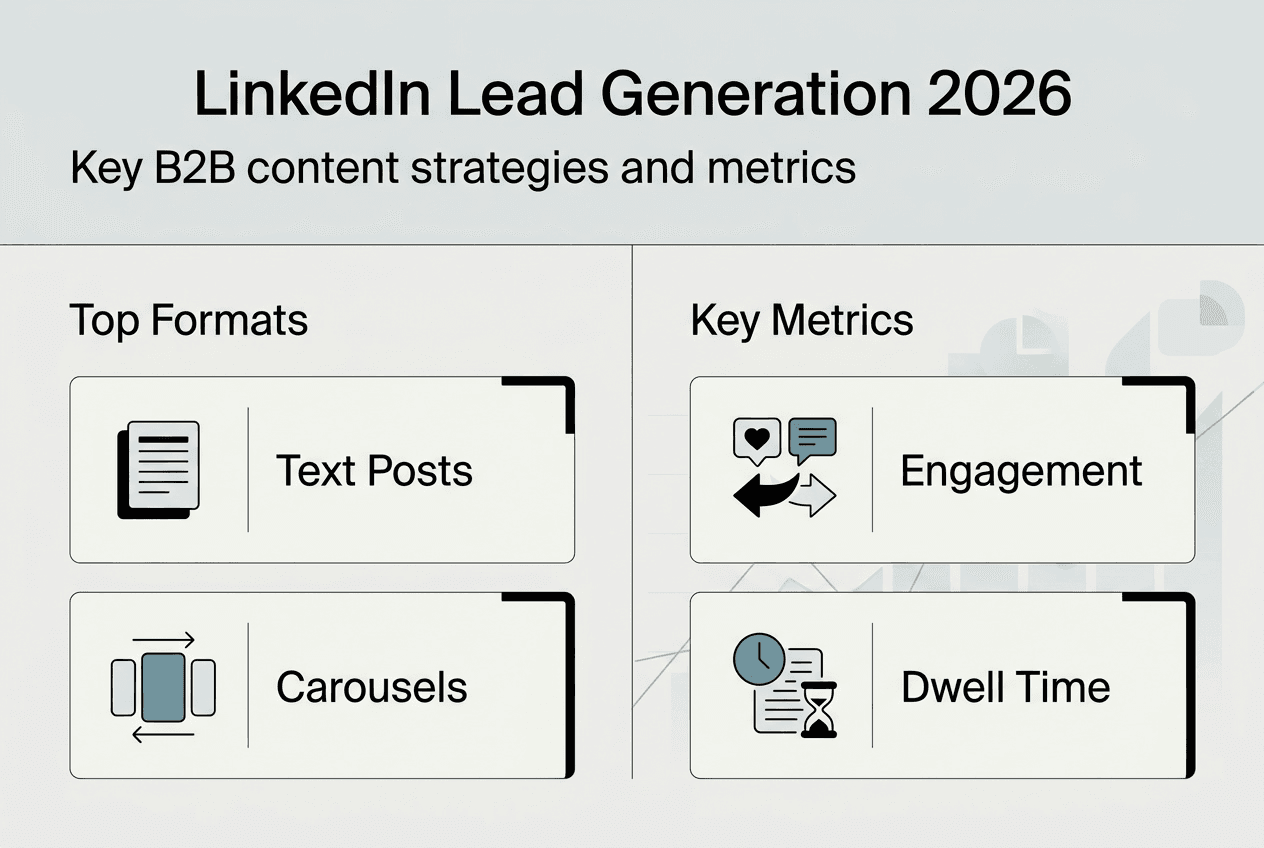
| Metric | What It Measures | Target Benchmark |
|---|---|---|
| Reach | Total unique viewers of your content | Steady growth month over month |
| Comments | Depth of engagement and discussion quality | 2-5% of reach for quality posts |
| Dwell time | How long users spend viewing your content | 30+ seconds for text, 60+ for video |
| Likes | Surface-level engagement indicator | Less important than comments |
| Shares | Content value and virality potential | 0.5-2% of reach |
| Follower growth | Audience building and brand awareness | 5-10% monthly increase |
| Profile views | Interest in you or your business | Correlates with content quality |
| Connection requests | Direct lead generation opportunity | 10-20 per quality post |
The relative importance of these metrics matters significantly. Comments are a more important engagement signal than likes, with posts receiving 50 thoughtful comments outperforming those with 500 passive likes. LinkedIn's algorithm prioritises content that sparks genuine conversation over posts that merely collect quick reactions. Structure your content to encourage discussion by ending with thought-provoking questions or controversial perspectives that invite commentary.
Dwell time is the primary quality signal for content distribution decisions. When users spend significant time reading, watching, or engaging with your post, LinkedIn interprets this as high-value content worthy of broader distribution. Create content that rewards attention: tell compelling stories, provide actionable frameworks, and deliver insights that require thoughtful consideration rather than instant consumption.
Implementing a robust LinkedIn content creation process helps you maintain quality whilst scaling production. Document what works, refine your approach based on data, and continuously test new content types and messaging angles. Successful B2B marketers treat LinkedIn content as an iterative process, constantly learning from results and adapting their strategies accordingly.
To improve LinkedIn engagement strategies over time, analyse your top-performing posts quarterly to identify patterns. What topics resonated most strongly? Which formats drove the highest engagement? What posting times delivered optimal reach? Use these insights to inform future content decisions whilst remaining flexible enough to capitalise on emerging opportunities and trending conversations.
Pro Tip: Use LinkedIn's native analytics dashboard alongside third-party tools to track performance comprehensively. Export data monthly to identify trends that daily monitoring might miss. Pay special attention to which posts drive profile views and connection requests, as these metrics directly correlate with lead generation potential. Adjust your content mix to emphasise formats and topics that consistently deliver these high-value outcomes.
How IN Social can enhance your LinkedIn lead generation in 2026
Mastering LinkedIn content creation requires expertise, consistency, and strategic insight that many SMBs struggle to maintain internally. IN Social specialises in LinkedIn-based lead generation and sales growth strategies, combining human expertise with advanced AI tools to deliver measurable results for B2B companies.
Our team understands the nuances of LinkedIn's algorithm, content best practices, and the specific challenges facing small to medium-sized businesses. We offer comprehensive LinkedIn lead generation and AI sales strategies including profile optimisation, content creation, employee advocacy programmes, and ongoing management tailored to your business objectives.
For businesses seeking community support and continuous learning, the IN Social Sales Club provides access to proven frameworks, expert guidance, and a network of B2B professionals committed to LinkedIn success. Whether you need full-service management or strategic coaching to empower your internal team, IN Social delivers transparent, results-focused solutions that drive qualified leads and accelerate revenue growth.
Frequently asked questions
What types of content perform best on LinkedIn for B2B lead generation?
Carousel and document posts generate the highest dwell time, keeping users engaged longer and signalling quality to LinkedIn's algorithm. Video content combined with influencer collaborations builds trust and brand awareness more effectively than static formats. Text posts that spark meaningful comments consistently outperform those accumulating passive likes, as the algorithm prioritises genuine conversation over superficial engagement.
How important is early engagement after posting on LinkedIn?
Early engagement within the first 60 to 90 minutes triples your post's ultimate reach by signalling content quality to LinkedIn's algorithm. Responding promptly to initial comments and actively encouraging discussion during this critical window dramatically impacts visibility. Neglecting this engagement period significantly limits how many people ultimately see your content, regardless of its quality.
Why should I avoid external links in my LinkedIn posts?
External links reduce post reach by approximately 60% because LinkedIn's algorithm penalises content directing users away from the platform. Instead, focus on native LinkedIn content formats that keep audiences engaged within the ecosystem. Add relevant links in the comments section after your post gains initial traction, satisfying both algorithmic preferences and your audience's need for additional resources.
How can employee posts amplify my LinkedIn content reach?
Employee posts reach over 561% further than company page posts, offering massive amplification for your message. Authentic employee storytelling builds trust and credibility more effectively than corporate messaging, as personal profiles access networks company pages cannot reach. Coordinate company and personal posts strategically, encouraging team members to share their unique perspectives whilst maintaining consistent messaging themes for maximum impact across your organisation's entire network.