

TL;DR:
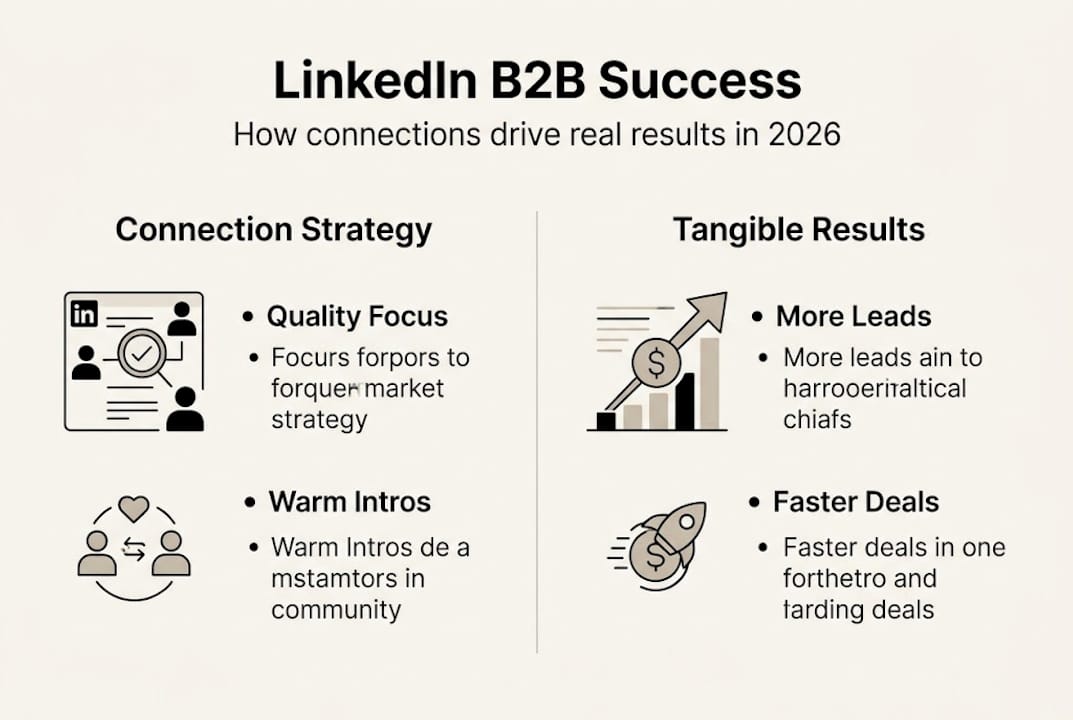
- Building strategic, quality LinkedIn connections fosters long-term B2B relationships and credible leads.
- Personalization, genuine engagement, and relationship nurturing outperform mass connection strategies.
- Patience and consistency on LinkedIn generate higher-quality leads than quick, generic outreach.
Most B2B sales teams assume that the more LinkedIn connections they accumulate, the better their pipeline will look. That assumption is costing them time, credibility, and real sales opportunities. The truth is that 95.7% of B2B marketers use LinkedIn for lead gen, yet most still struggle to convert those connections into meaningful conversations. The difference between teams that win on LinkedIn and those that don't isn't the size of their network. It's the strategy behind it. This guide breaks down exactly how to build connections that matter, avoid the most common mistakes, and turn your LinkedIn network into a consistent source of qualified B2B leads.
Table of Contents
- Why LinkedIn connections matter for B2B success
- Quality versus quantity: Building the right network
- Harnessing connections for sustained lead generation
- What most get wrong: Common pitfalls and real-world lessons
- Our perspective: The hidden value of authentic LinkedIn networking
- Take your LinkedIn connections further with expert support
- Frequently asked questions
Key Takeaways
| Point | Details |
|---|---|
| Strategic connections matter | Focusing on quality LinkedIn connections dramatically increases B2B lead generation potential. |
| Leverage content and engagement | Nurturing your network through valuable content and authentic interaction multiplies sales opportunities. |
| Avoid common pitfalls | Prioritising relevance over volume and consistent engagement prevents wasted effort and weak results. |
| Expert support accelerates growth | Bringing in LinkedIn specialists can help optimise your connection strategy and realise faster, stronger B2B results. |
Why LinkedIn connections matter for B2B success
LinkedIn is not just another social media platform. For B2B teams, it is the single most concentrated space where decision-makers, buyers, and influencers spend their professional time. With 95.7% of B2B marketers using it for lead generation and 73% logging in weekly, the platform's reach is not in question. What is in question is how most businesses are using it.
LinkedIn connections are more than vanity metrics. Each connection you make is a direct line to someone's professional world, their activity feed, their content, and their network. When you connect with the right people, you gain visibility with their audience too. That ripple effect compounds over time.
"Your LinkedIn network is not a list of contacts. It is a living, breathing ecosystem that reflects your professional reputation and your potential reach in the market."
Here is what strong LinkedIn connections actually unlock for B2B businesses:
- Direct access to decision-makers without cold calling
- Visibility into prospect behaviour through their activity and content
- Warm introduction pathways through mutual connections
- Brand authority built through consistent engagement
- Referral opportunities from satisfied clients and partners
Understanding the benefits of LinkedIn marketing goes well beyond impressions and follower counts. The real value lies in relationship-building over time. A single well-placed connection can lead to a six-figure contract, not because you pitched them immediately, but because you stayed visible and relevant.
That said, it is worth acknowledging a contrarian view. Some marketers argue that LinkedIn is an illusion for direct leads, suggesting it is better suited to awareness and relationship-building than capturing prospects who are actively in a buying cycle. There is merit to this. LinkedIn rarely delivers instant transactional results. But for B2B businesses playing a longer game, that is precisely why building a LinkedIn network with intention is such a powerful competitive advantage. The businesses that understand this nuance are the ones consistently winning deals from it.
The data supports a clear conclusion: LinkedIn connections, when treated as strategic assets rather than numbers on a profile, are one of the most reliable foundations for LinkedIn connections for B2B growth and sustainable revenue.
Quality versus quantity: Building the right network
Understanding why connections matter leads naturally to the next question: how do you ensure your network actually delivers results?
The most common mistake B2B teams make is treating LinkedIn like a numbers game. They send connection requests to hundreds of strangers, see low response rates, and conclude that LinkedIn doesn't work. The platform didn't fail them. Their strategy did.
A strategic connection is someone who fits one or more of these criteria:
- They match your ideal client profile by industry, company size, or role
- They are an influential voice in a sector you're targeting
- They can refer you to decision-makers you cannot yet reach directly
- They are a potential partner or collaborator who shares your audience
- They are already engaging with content relevant to your offer
| Approach | Volume | Conversion potential | Relationship depth |
|---|---|---|---|
| Mass connection strategy | High | Low | Shallow |
| Targeted quality strategy | Moderate | High | Deep |
| Hybrid (targeted + follow-up) | Moderate | Very high | Strong |
The table above makes the case clearly. Chasing volume produces surface-level networks that rarely convert. Targeted connection-building, combined with genuine follow-up, is what drives real business impact. For practical guidance on this, our resource on building a B2B LinkedIn network outlines proven frameworks for identifying and approaching the right people.
Pro Tip: Before sending a connection request, spend 60 seconds reviewing the person's recent activity. Reference something specific in your message. This single step dramatically increases your acceptance rate and sets the tone for a genuine relationship rather than a sales pitch.
When 95.7% of B2B marketers are competing for the same attention on LinkedIn, personalisation is not a nice-to-have. It is what separates you from the noise. The LinkedIn benefits for B2B sales compound most powerfully when each connection feels intentional, both to you and to the person receiving your request.
Reciprocity also plays a significant role. When you engage with a prospect's content before connecting, comment thoughtfully, share their posts, or celebrate their wins, you create a sense of familiarity. By the time you send that connection request, it no longer feels cold.
Harnessing connections for sustained lead generation
Once you've cultivated the right network, the question becomes: how do you turn those relationships into steady, high-quality leads?

Warm introductions are one of the most underused tools in B2B sales. When a mutual connection introduces you to a prospect, the trust transfer is immediate. Buyers are far more likely to take a meeting with someone who comes recommended than with a stranger in their inbox. This is not a new concept, but LinkedIn makes it scalable in a way that no other platform currently does.
| Lead source | Typical conversion rate | Warm-up time required |
|---|---|---|
| Cold outreach (no connection) | 1 to 3% | High |
| LinkedIn connection with engagement | 10 to 20% | Moderate |
| Warm introduction via mutual contact | 25 to 40% | Low |
The data makes a compelling case for relationship-first selling. Investing time in nurturing your network pays back with significantly higher conversion rates. For practical frameworks on this, the range of lead generation tactics proven in 2026 show that consistency in engagement, not just initial outreach, is what drives pipeline.
Here is how to leverage your connections for sustained lead generation:
- Post valuable content regularly to stay visible in your connections' feeds without reaching out directly
- Comment meaningfully on prospects' posts to build familiarity and credibility
- Use LinkedIn's messaging for follow-up after you've built some rapport, not immediately after connecting
- Share case studies and results that speak directly to the challenges your ideal clients face
- Celebrate milestones of your connections, promotions, company news, and new roles, as these open natural conversations
Pro Tip: Your 2nd and 3rd degree connections are a goldmine. When a prospect is just out of reach, look for mutual connections who can facilitate a warm introduction. A brief, genuine message asking for an introduction is far more effective than a cold outreach attempt.
Strategic LinkedIn content for B2B leads plays a central role here. The right content keeps you front of mind with your network, so that when a need arises, you are already the first person they think of. That is a position worth building deliberately. Research also consistently shows that LinkedIn drives more B2B leads than other social platforms for UK SMBs, making it the logical place to focus your energy.
What most get wrong: Common pitfalls and real-world lessons
Maximising lead generation also means navigating the challenges and avoiding mistakes that many firms make.
The most widespread error is the spray and pray approach. Teams send identical connection requests to hundreds of profiles, follow up with a generic pitch within 48 hours, and then wonder why nobody responds. This approach does not just fail. It actively damages your reputation on the platform.
Here are the most common pitfalls that hold B2B teams back on LinkedIn:
- Connecting without context: Sending blank connection requests or using LinkedIn's default message
- Pitching too soon: Treating a new connection like a warm lead before any rapport is built
- Ignoring your existing network: Focusing entirely on new connections while neglecting people already in your network
- Posting inconsistently: Going silent for weeks, then flooding feeds with promotional content
- Measuring the wrong metrics: Optimising for connection count rather than meaningful engagement or conversations started
"LinkedIn is not a shortcut to sales. It is a long-term investment in relationships that, when nurtured correctly, produces some of the highest-quality leads you'll ever close."
This perspective is echoed in the ongoing debate on LinkedIn's effectiveness across B2B marketing communities. Many businesses become disillusioned because they expected fast results and walked away before the relationship-building had time to pay off. The platform rewards patience and consistency, not urgency.
For businesses serious about fixing these mistakes, exploring LinkedIn B2B sales strategies that are built around engagement rather than extraction is the right starting point. And prioritising LinkedIn marketing as a sustained channel rather than a one-off campaign is what separates the businesses generating consistent leads from those chasing one-off wins.
Our perspective: The hidden value of authentic LinkedIn networking
With the common pitfalls highlighted, here is our experienced perspective on what really works for B2B teams.
We have worked with dozens of small and medium-sized B2B businesses, and the pattern is consistent. The teams that get the most from LinkedIn are not the ones with the biggest networks. They are the ones who show up with genuine curiosity and a real desire to add value before asking for anything in return.
We once worked with a consultancy that had fewer than 300 LinkedIn connections. Within six months of shifting to a value-driven dialogue approach, commenting thoughtfully, sharing relevant insights, and engaging with prospects' content before ever reaching out, they had two new retainer clients worth over £80,000 combined. Not from cold outreach. From relationships.
The uncomfortable truth is that mass-adding contacts and automating generic messages might feel productive. It rarely is. Authenticity and patience are not soft virtues on LinkedIn. They are your sharpest competitive edge. The businesses investing in growing B2B leads using LinkedIn the right way are building pipelines that hold up even when budgets tighten and markets shift.
Take your LinkedIn connections further with expert support
Building a high-performing LinkedIn network takes time, strategy, and consistent effort. Most business owners and sales teams are already stretched thin. Going it alone often means slow progress, missed opportunities, and wasted hours on tactics that don't convert.
That's where specialist support makes the difference. At In-Social, we combine human expertise with advanced tools to help B2B businesses build the right connections, start the right conversations, and generate qualified leads without the guesswork. Whether you need fully managed LinkedIn solutions or targeted LinkedIn lead generation services, we build strategies around your goals and your market. If you're ready to see what a structured LinkedIn approach can do for your pipeline, let's talk.
Frequently asked questions
How many LinkedIn connections should a B2B business aim for?
Focus on quality over quantity. As outlined in 7 key benefits of LinkedIn for sales, even a few hundred targeted connections can outperform thousands of random ones when it comes to generating genuine leads.
What is the best way to approach a new LinkedIn connection for business?
Personalise your message, reference a shared interest or mutual contact, and prioritise rapport before mentioning your services. The principles in how to build a LinkedIn network for B2B sales outline this approach clearly.
Does LinkedIn really generate B2B leads reliably in 2026?
Yes, when used strategically. With 95.7% of B2B marketers relying on it for lead generation, LinkedIn remains the most effective platform for B2B outreach when backed by a consistent, value-driven strategy.
Are LinkedIn connections useful if prospects are not actively buying?
Absolutely. As the debate around LinkedIn's direct lead value confirms, the platform excels at keeping you top of mind so that when a prospect is ready to buy, you are already the trusted option they turn to.