

TL;DR:
- Most SMBs fail to see LinkedIn as a relationship-building platform, instead treating it like a cold outreach tool.
- Effective business development on LinkedIn involves consistent engagement, adding value, and nurturing trust over time to create revenue opportunities.
Most B2B companies arrive on LinkedIn with good intentions and leave frustrated, because they treat it like a cold calling list with a professional photo attached. Understanding what is business development on LinkedIn means letting go of the idea that connection requests equal sales opportunities. Real LinkedIn business development is about building trust systematically, creating visibility with the right people, and turning relationships into revenue over time. This article walks you through exactly how that works, from the tools available to the tactics that actually fill pipelines for small and medium-sized B2B businesses.
Table of Contents
- What business development on LinkedIn really means
- Leveraging LinkedIn tools to build and manage relationships at scale
- Using LinkedIn for one-to-many outreach: webinars, events and content
- Paid LinkedIn advertising for business development: sponsored article ads
- Building lasting relationships through consistency and follow-up on LinkedIn
- Why many SMBs get LinkedIn business development wrong and how to fix it
- How IN Social can enhance your LinkedIn business development
- Frequently asked questions
What business development on LinkedIn really means
Business development, done properly, is not about firing off pitch messages to everyone who accepts your connection request. It is about creating the conditions for commercial opportunity. On LinkedIn, that means showing up consistently, adding value before you ask for anything, and staying visible to people who might one day need what you offer.
As business development misconceptions are so common across industries, it is worth stating clearly: the single biggest misconception is that business development is sales, but it starts with relationships and trust before transactions. Sales is a narrower, later-stage process. Business development is everything that makes sales possible.
For SMBs, this distinction matters enormously. You probably do not have a large sales team with hours to burn on cold outreach. What you do have is the ability to build genuine credibility in your niche, and LinkedIn is one of the best places to do that. Understanding why use LinkedIn for B2B starts with recognising it as a relationship engine, not just a jobs board.
Here is what LinkedIn business development actually looks like in practice:
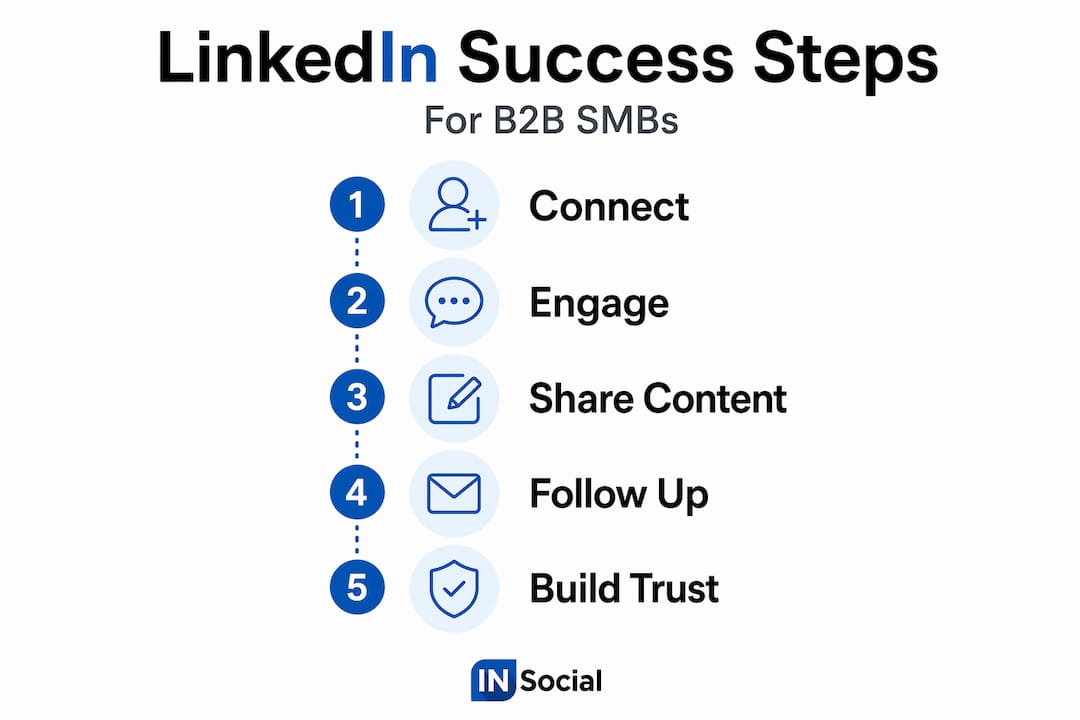
- Connecting with decision-makers in your target sector and nurturing those connections over weeks, not hours
- Commenting meaningfully on posts from prospects to stay visible and demonstrate expertise
- Sharing content that addresses real problems your ideal clients face, positioning you as a go-to voice
- Following up after events, conversations, or content interactions without going straight to a sales pitch
- Identifying referral sources and staying warm with people who can open doors
The shift from "LinkedIn as a sales tool" to "LinkedIn as a relationship platform" is where most SMBs unlock genuine, why use LinkedIn for B2B sustainable growth.
Leveraging LinkedIn tools to build and manage relationships at scale
Understanding the concept is one thing. Having the tools to execute it at scale is another. LinkedIn's own ecosystem gives B2B teams a genuine advantage here, particularly through Sales Navigator.

Sales Navigator helps teams discover leads, build relationships, and optimise outreach at scale using LinkedIn data and advanced sales tools. For an SMB, this matters because you can define your ideal customer profile precisely, whether that is CFOs in manufacturing businesses with 50 to 200 employees or HR directors at professional services firms in the North West, and then surface exactly those people from LinkedIn's network of over one billion members.
The core features worth knowing about:
- Advanced lead search filters that go far beyond job title, including seniority, company growth signals, and recent activity
- Lead and account lists that let you organise prospects by priority or stage in the relationship
- InMail credits that give you direct access to people you are not yet connected with
- CRM integration that syncs lead data automatically, so your outreach history follows you across platforms
- Alerts on saved leads that notify you when a prospect changes job, posts content, or mentions a relevant keyword
Pro Tip: Use Sales Navigator's "Spotlight" filter to find prospects who have been active on LinkedIn recently. These people are far more likely to respond to outreach than dormant users who log in once a month.
The CRM integration point is often underused by SMBs. When your LinkedIn activity syncs with your CRM, you stop losing track of warm conversations and can see a full picture of where each relationship stands. That is the kind of workflow that turns LinkedIn lead generation from a time-consuming manual task into a repeatable system.
Using LinkedIn for one-to-many outreach: webinars, events and content
One of the most underused business growth strategies on LinkedIn is the shift from one-to-one messaging to one-to-many communication. Instead of sending individual connection messages all week, you invite your network to an event where your expertise does the selling for you.
"LinkedIn allows inviting up to 1,000 first-degree connections per week per profile for webinar and workshop invitations, making it a powerful one-to-many sales channel."
That number is significant. If you have a team of five people each inviting 1,000 contacts weekly, you can reach 5,000 warm prospects every single week without spending a penny on advertising. This is LinkedIn business development 101 for companies that want pipeline growth without paid ad dependency.
Here is how to build a simple one-to-many system on LinkedIn:
- Create a LinkedIn Event for a webinar, live workshop, or Q&A session on a topic your target audience genuinely cares about
- Invite first-degree connections who match your ideal customer profile, using filters to keep the audience relevant
- Post content in the weeks before the event to warm up your network and build anticipation
- Deliver genuine value during the event rather than a thinly disguised sales pitch
- Follow up with attendees individually after the event with a personalised message based on questions they asked or reactions they shared
The pipeline effect of this approach compounds over time. When you run monthly or fortnightly events, you build a community of prospects who associate your brand with useful, trustworthy content. Some will buy from you in month two. Others might take twelve months. Both outcomes are valuable. For more tactical ideas, the guide on effective LinkedIn outreach examples is worth reading alongside this approach.
Paid LinkedIn advertising for business development: sponsored article ads
Organic relationship-building takes time to compound. Paid LinkedIn advertising gives you a way to accelerate reach while your organic efforts grow. For SMBs, the most relevant paid format to understand is Article Ads.
Article Ads are native sponsored content posts that help send messages beyond company page followers, including Direct Sponsored Content that only appears as ads in the feed rather than on your company page. This means you can test messaging with a targeted audience before ever publishing it organically.
Here is a quick comparison of how organic and paid LinkedIn content work together:
| Feature | Organic content | Sponsored article ads |
|---|---|---|
| Audience reach | Limited to followers and their networks | Extended to precisely targeted non-followers |
| Cost | No direct cost | Pay per click or impression |
| Speed of results | Slow to build, compounds over time | Faster reach, immediate visibility |
| Testing flexibility | Low, published publicly | High, test without going public |
| Best use | Credibility and community building | Lead generation and demand creation |
Key points to understand about paid LinkedIn ads for business development:
- Direct Sponsored Content lets you test multiple versions of messaging with different audience segments without cluttering your company page
- Retargeting allows you to reach people who have already visited your website or engaged with your content, which warms up cold audiences significantly
- Lead Gen Forms within ads pre-populate with LinkedIn profile data, reducing friction and dramatically improving conversion rates
Used well, paid ads do not replace organic relationship-building. They accelerate it. If you want to explore LinkedIn lead generation without cold outreach, combining Article Ads with a strong content calendar is one of the most effective routes available to SMBs right now.
Building lasting relationships through consistency and follow-up on LinkedIn
You can have the best tools, the best content, and the best targeting in the world. If you disappear from LinkedIn for three weeks, you lose momentum. What is networking on LinkedIn if not a commitment to showing up regularly for the people you want to build relationships with?
"Consistent follow-up and relationship visibility are essential to successful business development; inactivity makes professionals invisible to potential clients."
This is the part most SMBs get wrong. They do a burst of activity, get a few conversations going, then get busy and go quiet. The prospect forgets them. The pipeline dries up. The cycle repeats.
Here is what consistent LinkedIn business development actually looks like week by week:
- Post two to three times per week with content that addresses real problems for your target audience
- Comment on five to ten posts daily from prospects, clients, and referral partners to maintain visibility
- Send two to five personalised follow-up messages to people you have had conversations with, not cold pitches but genuine check-ins
- Congratulate connections on promotions, work anniversaries, or published content because these moments build goodwill
- Review your connection list monthly for dormant relationships worth reactivating
Pro Tip: Set a 15-minute daily LinkedIn routine covering comments, messages, and one piece of content engagement. Consistency over 90 days will outperform any burst campaign you run for a week.
Building on LinkedIn connections for business is less about volume and more about depth. Fifty warm relationships with genuine dialogue will outperform 500 connections who have never heard from you since you connected. For a practical framework on building LinkedIn networks that convert, the approach matters far more than the numbers.
Why many SMBs get LinkedIn business development wrong and how to fix it
Here is the uncomfortable truth. Most SMBs treat LinkedIn like a lottery ticket. They do a burst of outreach, wait for leads to materialise, see nothing in two weeks, and declare that LinkedIn "does not work." That is not a LinkedIn problem. That is a patience and strategy problem.
The compounding effect of consistent engagement on LinkedIn is real, but it is not fast. We have seen businesses run a LinkedIn sales funnel for 60 days and feel like nothing is happening, then suddenly hit month three and have more pipeline conversations than they can handle. The engine was warming up the whole time.
The second error is treating every LinkedIn interaction as a transaction. When your first message to a new connection is a pitch, you signal that you see them as a revenue source, not a person. That is relationship poison. The best LinkedIn business developers we work with think in terms of questions, insights, and genuine curiosity. The sales conversation comes naturally once trust is established.
The third mistake is neglecting existing clients and referral sources in favour of chasing cold prospects. Your happiest current clients are your most credible advocates on LinkedIn. Engaging with their content, congratulating their wins, and staying visible in their feed keeps you top of mind when they are asked for referrals. That is where LinkedIn's value for sales teams is often most overlooked.
A 90-day commitment to native LinkedIn behaviour, regular posting, authentic commenting, strategic events, and genuine follow-up will change what is possible for your business. That is not a marketing claim. It is what the data from businesses who stick at it consistently shows.
How IN Social can enhance your LinkedIn business development
Understanding the strategy is the first step. Executing it consistently while running a business is where most SMBs struggle. That is exactly where IN Social comes in.
IN Social works with B2B SMBs to build and run LinkedIn business development programmes that generate qualified leads without relying on pushy tactics or spray-and-pray messaging. From LinkedIn lead generation strategies tailored to your specific market, to managed LinkedIn services that handle your outreach, content, and network growth on your behalf, the team combines human expertise with AI-backed insights to deliver measurable results. If you want to build a consistent pipeline through relationships rather than cold sales, explore how lead generation without cold outreach works in practice.
Frequently asked questions
What distinguishes business development on LinkedIn from direct selling?
Business development on LinkedIn focuses on building trust and long-term relationships rather than immediate sales transactions, which is what direct selling targets. As JD Supra notes, business development begins with relationships and trust rather than transactional pitching.
How does LinkedIn Sales Navigator help business development efforts?
Sales Navigator enables B2B teams to find qualified leads, manage relationship workflows, and optimise outreach at scale using LinkedIn's data and integration with CRM systems. According to Salesforce, it helps teams discover leads, build relationships, and optimise outreach backed by LinkedIn data and advanced tools.
Can LinkedIn webinars help scale business development?
Yes, LinkedIn events like webinars allow you to educate and qualify many prospects simultaneously, effectively creating demand without relying solely on paid ads. LinkedIn allows up to 1,000 first-degree connection invitations weekly per profile to webinars, supporting one-to-many selling.
What role do paid LinkedIn ads play in business development?
Paid ads such as Article Ads extend the reach of your content to targeted audiences beyond your followers, complementing organic efforts by accelerating lead generation and engagement. Article Ads are sponsored content posts in LinkedIn feeds that extend reach beyond company page followers to targeted audiences.
Why is consistent follow-up crucial for business development on LinkedIn?
Regular engagement keeps you visible and builds trust over time, preventing potential clients from forgetting you and nurturing lasting business relationships. Inactivity leads to invisibility and lost opportunities, making consistent follow-up one of the highest-value habits in LinkedIn business development.