

Creating LinkedIn content that actually drives leads feels impossible when your posts disappear into the void with minimal engagement. You're not alone. Most B2B marketing managers struggle to crack the platform's algorithm, especially as LinkedIn's 2026 updates prioritise depth and authenticity over promotional noise. The good news? A strategic, stepwise approach to content creation can transform your LinkedIn presence from invisible to influential. This guide walks you through exactly what works now, from profile optimisation to post formats that spark genuine conversations and convert connections into qualified leads.
Table of Contents
- Understanding LinkedIn Content For B2B In 2026
- What You Need Before Creating LinkedIn Content
- Step-By-Step Guide To Creating Engaging LinkedIn Content
- Measuring Success And Optimising Your LinkedIn Content
- Enhance Your LinkedIn Lead Generation With Expert Support
- Frequently Asked Questions
Key takeaways
| Point | Details |
|---|---|
| Personal profiles outperform company pages | Individual accounts achieve 10-20% organic reach versus 2-5% for company pages, making them essential for B2B visibility. |
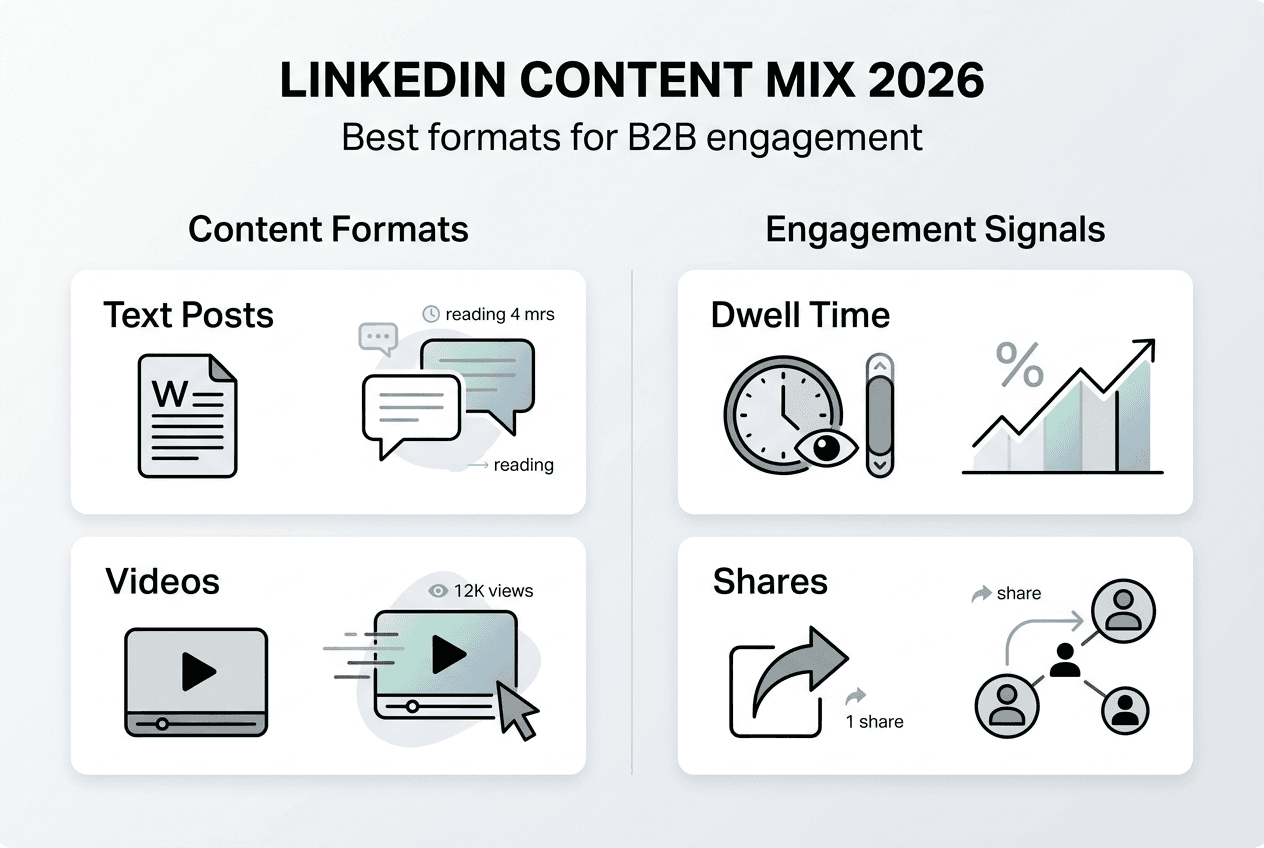
| Text-only posts drive engagement | Posts of 800-1300 characters without external links generate the highest reach and comment rates. |
| Consistent topic focus builds authority | Posting regularly on 2-3 niche subjects establishes expertise and improves algorithmic favour. |
| External links kill reach | Including URLs in posts reduces organic distribution by 60% under 2026 algorithm rules. |
| Engagement quality matters most | Track dwell time, comment depth, and profile views rather than vanity metrics like post impressions. |
Understanding LinkedIn content for B2B in 2026
LinkedIn's algorithm has evolved dramatically, and understanding these shifts is non-negotiable for B2B success. The platform now rewards what it calls a Depth Score, which measures how long users engage with your content and the quality of resulting conversations. Posts that generate meaningful comments and sustained attention climb higher in feeds, whilst shallow engagement tactics get buried.
The most critical change? External links reduce reach by 60% because LinkedIn wants to keep users on platform. This fundamentally alters how you share resources and drive traffic. Simultaneously, personal profiles achieve 10-20% organic reach compared to company pages' dismal 2-5%, with engagement rates following similar patterns (3-8% versus 0.5-2%). If you're still prioritising company page content over personal profiles, you're fighting an uphill battle.
Here's what the algorithm actively penalises:
- Engagement pods and artificial comment schemes
- Generic, surface-level content that fails to demonstrate expertise
- Inconsistent posting patterns that suggest automation
- Clickbait hooks that don't deliver on promises
The winning strategy centres on building recognised expertise in 2-3 specific topics through consistent, authentic content. When you repeatedly share valuable insights on focused themes, LinkedIn's algorithm identifies you as an authority and amplifies your reach to relevant audiences. This approach aligns perfectly with LinkedIn content for B2B lead generation principles, where depth trumps breadth every time.
Pro Tip: Choose topics where you have genuine expertise and client success stories. Authenticity shows through in your writing and the algorithm rewards it with better distribution.
"The 2026 algorithm doesn't just count engagement, it evaluates quality. A thoughtful three-sentence comment outweighs ten emoji reactions."
This shift means improving LinkedIn engagement requires substance over gimmicks. You need content that makes people pause, think, and respond with their own insights rather than quick likes. The algorithm tracks how long someone reads your post, whether they click to read more, and if the resulting comments spark further discussion.
What you need before creating LinkedIn content
Jumping straight into posting without proper groundwork wastes time and effort. Start by optimising your personal LinkedIn profile for credibility. Your headline should clearly state who you help and how, not just your job title. The about section needs to address your audience's pain points whilst showcasing your expertise through specific results you've achieved. A professional photo and banner image signal you're serious about your presence.
Next, define your 2-3 niche topics with laser precision. Vague themes like "marketing tips" won't cut it. Instead, focus on specific challenges your ideal clients face. A marketing manager at a manufacturing SMB might concentrate on LinkedIn lead generation for technical B2B products, sales enablement content strategies, and measuring marketing ROI. These topics should overlap with your services and allow you to empower content with proof and data.
Understanding your audience goes beyond basic demographics. You need to know:
- What keeps them awake at night professionally
- Which metrics their bosses care about
- What objections they face when proposing new initiatives
- Where they currently seek solutions
This intelligence shapes every piece of content you create. When you speak directly to their specific situation, engagement follows naturally. The content strategy workflow B2B approach emphasises this audience-first mentality.
Setup tracking mechanisms before your first post goes live. You'll need to monitor depth metrics like dwell time (how long people read), comment quality (substantive responses versus generic praise), profile views, direct messages, and ultimately calls booked. Create a simple spreadsheet or use a CRM to log these interactions. Without tracking, you're flying blind.
| Preparation Element | Why It Matters | Time Investment |
|---|---|---|
| Profile optimisation | First impression for profile visitors from posts | 2-3 hours initially |
| Topic selection | Focuses content and builds algorithmic authority | 1-2 hours planning |
| Audience research | Ensures relevance and engagement | Ongoing, 30 mins weekly |
| Tracking setup | Enables data-driven optimisation | 1 hour initially |
Finally, establish a content calendar and batching routine. Consistency matters more than perfection. Plan to post 3-5 times weekly, choosing specific days and times when your audience is active. Batch create content in 2-3 hour blocks to maintain quality whilst building a buffer. This systematic approach, detailed in LinkedIn content best practices, prevents the feast-or-famine posting pattern that tanks algorithmic favour.

Pro Tip: Use a notes app to capture content ideas throughout the week. When you sit down to batch create, you'll have a ready list rather than staring at a blank screen.
Step-by-step guide to creating engaging LinkedIn content
Now for the execution. Follow this proven workflow to produce posts that actually perform:
-
Craft your hook in the first 1-2 lines. You have seconds to stop the scroll. Open with a surprising statistic, a contrarian viewpoint, or a relatable problem statement. "83% of B2B buyers ignore cold outreach" grabs attention. "Everyone says post daily. They're wrong" creates curiosity. Avoid generic openings like "I've been thinking about..." that telegraph boring content ahead.
-
Write text-only posts of 800-1300 characters. This length outperforms images and links consistently. Structure your post with short paragraphs (2-3 sentences max) and strategic line breaks for readability. Use bullet points sparingly to highlight key takeaways without overwhelming the format.
-
End with a specific question. Generic asks like "What do you think?" generate weak responses. Instead, pose questions that require thoughtful answers: "Which of these three approaches has worked best in your experience?" or "What's the biggest obstacle you've faced implementing this?" Questions drive comments, which signal engagement quality to the algorithm.
-
Use carousels for deeper educational content. When you need to explain a framework or share detailed data, LinkedIn's document format (carousels) keeps users on platform whilst allowing more comprehensive coverage. Design slides with clear headlines, minimal text per slide, and a strong call to action on the final slide directing readers to your profile or DMs.
-
Avoid external links and engagement pods completely. This bears repeating because it's counterintuitive. Don't include URLs in your posts, even to valuable resources. Instead, mention in comments that you'll share the link via DM to interested people, or include links in your profile's featured section. Similarly, engagement pods where people agree to like and comment on each other's posts trigger algorithm penalties.
-
Batch create and schedule strategically. Write 5-10 posts in one sitting when you're in creative flow. This maintains consistent voice and quality. Schedule them using LinkedIn's native scheduler or a tool like Buffer, spacing posts across optimal times. Most B2B audiences engage during work hours, with Tuesday through Thursday mornings showing strongest performance.
-
Engage actively in the first hour after posting. The algorithm watches early engagement signals closely. When your post goes live, respond to every comment within 60 minutes. Ask follow-up questions to commenters, tag relevant connections who might add value to the discussion, and share the post to your story. This initial activity boost significantly impacts overall reach.
| Content Format | Best Use Case | Typical Reach | Engagement Rate |
|---|---|---|---|
| Text-only post | Quick insights, questions, personal stories | Highest (10-20%) | High (3-8%) |
| Carousel/Document | Frameworks, step-by-step guides, data | Medium (8-15%) | Medium (2-5%) |
| Image post | Visual data, infographics | Lower (5-12%) | Medium (2-4%) |
| Video | Demonstrations, interviews | Variable (6-18%) | Variable (2-6%) |
The content creation process B2B guide expands on these formats with specific examples. Remember, the goal isn't just visibility but starting conversations that lead to relationship building. Every post should advance that objective.
Pro Tip: Keep a swipe file of high-performing posts (yours and others') to identify patterns in structure, topics, and hooks that resonate with your audience.
Variety matters too. Whilst text posts form your content backbone, mixing in different types of LinkedIn content for B2B prevents audience fatigue. Rotate between educational posts, client success stories, industry commentary, and behind-the-scenes glimpses of your work. This diversity keeps your feed interesting whilst reinforcing your core topics from multiple angles.
Measuring success and optimising your LinkedIn content
Vanity metrics lie. Post impressions and follower counts mean nothing if they don't translate to business outcomes. Focus instead on engagement quality indicators that predict lead generation success. Track dwell time and comment quality as primary metrics, looking for substantive responses that demonstrate genuine interest rather than superficial "Great post!" reactions.
The metrics that actually matter:
- Profile views: Spikes after posts indicate content relevance and curiosity about your expertise
- Direct messages: Inbound DMs asking questions or requesting more information signal buying intent
- Calls booked: The ultimate conversion metric for B2B lead generation
- Comment depth: Multi-sentence responses and follow-up questions show true engagement
- Multi-touch engagement: When the same people interact with multiple posts, they're warming up
Avoid these common mistakes that sabotage results. Inconsistent posting confuses the algorithm and trains your audience not to expect regular content. Over-automation through generic scheduling tools creates robotic, inauthentic content that readers immediately recognise and ignore. Focusing solely on promotional content rather than value-driven education positions you as a vendor rather than a trusted adviser.
| Metric Type | What to Track | Success Indicator | Action Threshold |
|---|---|---|---|
| Engagement Quality | Comments with 2+ sentences | 15%+ of total engagement | Below 10%: revise content depth |
| Lead Signals | Profile views from target companies | 5+ per post | Below 3: refine targeting |
| Conversion | DMs and calls booked | 2-3 per week minimum | Below 1: strengthen CTAs |
| Consistency | Posts per week | 3-5 consistently | Missing weeks: adjust schedule |
Implement a practical 30-day plan to baseline and optimise systematically. Week one focuses on establishing posting rhythm and tracking baseline metrics. Week two introduces A/B testing of different hooks and content angles. Week three emphasises engagement tactics and relationship building through comments. Week four analyses results and refines your approach based on what's working.
Iterate based on audience feedback, both explicit and implicit. When certain topics generate more saves and shares, double down on those themes. If questions in comments reveal knowledge gaps, create content addressing them. Pay attention to which posts lead to actual business conversations versus hollow engagement.
The LinkedIn engagement guide 2026 provides frameworks for interpreting these signals and adjusting strategy. Remember, optimisation is continuous. What works today might need refinement next quarter as your audience evolves and platform dynamics shift.
Pro Tip: Review your top five performing posts monthly to identify patterns in topics, formats, and hooks. Use these insights to inform your content calendar for the following month.
Don't forget qualitative feedback. Ask engaged connections directly what content they find most valuable. Run occasional polls to gauge interest in potential topics. This direct input, combined with quantitative metrics, creates a complete picture of content performance. For additional inspiration, explore LinkedIn content ideas UK B2B to keep your content calendar fresh and relevant.
Enhance your LinkedIn lead generation with expert support
Mastering LinkedIn content creation takes time and consistent effort. Whilst this guide provides the strategic foundation, executing at scale whilst running your business presents real challenges. That's where specialised support accelerates results. IN Social combines human expertise with AI-enhanced techniques to amplify your LinkedIn lead generation & AI sales strategies, helping B2B SMBs achieve measurable outcomes faster.
Our managed LinkedIn services handle content creation, posting schedules, and engagement management so you maintain consistent presence without the daily time investment. We've helped dozens of B2B companies transform LinkedIn from an ignored platform into their primary lead source. Whether you need full management or strategic guidance, we tailor solutions to your specific goals and resources. Curious if LinkedIn fits your sales model? Our LinkedIn sales strategy evaluation provides clarity on potential ROI and implementation approach for your unique situation.
Frequently asked questions
How often should I post LinkedIn content for best results?
Post consistently 3-5 times per week to build presence without overwhelming your audience. This frequency trains the algorithm to recognise you as an active, valuable contributor whilst giving you enough touchpoints to stay visible. Batch content creation helps maintain this regular posting rhythm even during busy periods.
What types of LinkedIn content generate the most engagement in B2B?
Text-only posts of 800-1300 characters with specific questions at the end drive highest engagement rates. Customer success stories, data-backed insights, and contrarian perspectives on industry assumptions perform particularly well. Content that challenges conventional thinking whilst providing actionable takeaways sparks the meaningful conversations the algorithm rewards.
How can I track if my LinkedIn content is generating leads?
Monitor profile views from target companies, direct messages requesting more information, and calls booked as primary lead indicators. Track the quality of comments and multi-touch engagement signals where the same prospects interact with multiple posts over time. These patterns reveal warming leads better than surface metrics like post impressions.
Should I include external links in my LinkedIn posts?
Avoid external links in organic posts because they experience 60% less reach under LinkedIn's 2026 algorithm. Instead, mention you'll share resources via direct message to interested connections, or include important links in your profile's featured section. This approach maintains reach whilst still providing value to engaged audience members.