

Your LinkedIn profile can make or break your chances with new clients in just a few seconds. For sales professionals and business owners at growing B2B companies, making a strong online impression is not optional. By focusing on a keyword-rich profile, clear networking goals, and consistent engagement, you lay the groundwork for genuine relationships that drive real business growth on this powerful platform.
Table of Contents
- Step 1: Optimise your LinkedIn profile for business growth
- Step 2: Define your networking goals and audience
- Step 3: Strategically connect with targeted prospects
- Step 4: Engage consistently to nurture relationships
- Step 5: Evaluate progress and refine your approach
Quick Summary
| Main Insight | Explanation |
|---|---|
| 1. Optimise your LinkedIn profile | A well-structured profile enhances visibility and credibility, attracting targeted business opportunities. |
| 2. Define your networking goals | Setting specific, measurable goals streamlines your LinkedIn networking into a purposeful strategy. |
| 3. Strategically connect with prospects | Personalising connection requests fosters genuine relationships, increasing engagement and conversion rates. |
| 4. Engage consistently with your network | Regular interaction keeps you top-of-mind, fostering trust that is essential for long-term business relationships. |
| 5. Evaluate and refine your approach | Monthly assessments of engagement metrics enable data-driven adjustments for improved lead generation effectiveness. |
Step 1: Optimise your LinkedIn profile for business growth
Your LinkedIn profile is your first impression on the platform. Think of it as your digital storefront—potential clients and network connections form opinions within seconds of landing on your page. This step focuses on making that first impression count through strategic optimisation that attracts the right opportunities.
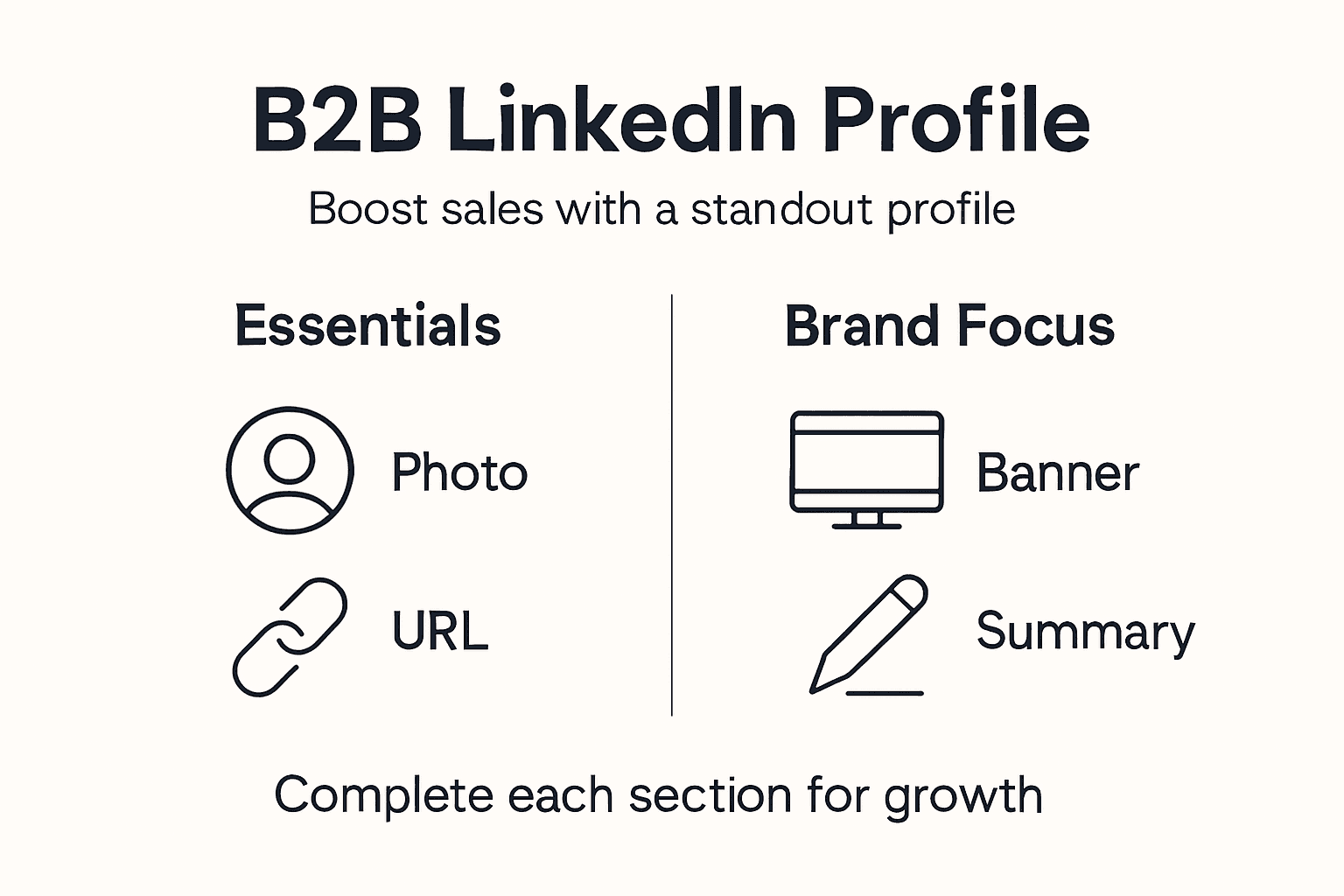
Start by uploading a professional headshot that reflects your industry. Your photo should be clear, well-lit, and feature you alone against a neutral background. Next, craft a compelling headline that goes beyond your job title. Instead of "Sales Director," try "B2B Sales Director | LinkedIn Lead Generation | Revenue Growth Specialist." This keyword-rich approach helps you appear in searches when decision-makers look for exactly what you offer.
Your profile URL deserves attention too. Customise it to include your name (for example: linkedin.com/in/yourname) rather than accepting the default string of numbers. This makes your profile more memorable and easier to share.
The summary section is where you tell your story. Write a narrative that explains your expertise and value in conversational language. Avoid corporate jargon. Instead, speak directly to your target audience about the problems you solve and the results you deliver. Research shows that keyword-rich descriptions boost your visibility and build credibility, which attracts potential business connections.
Your banner image strengthens your brand further. Use a professional design that aligns with your industry and reinforces your positioning. Ensure consistency between your headline, summary, and banner so visitors see a cohesive professional image.
Include relevant keywords throughout your profile sections. Think about the terms your ideal clients use when searching on LinkedIn. Weave these naturally into your headline, summary, and job descriptions. This improves your discoverability without sounding forced.
Your experience section should highlight achievements, not just duties. Use bullet points to describe results you've achieved. Include metrics where possible: "Generated £2.3m in new business revenue within 18 months" performs far better than "responsible for sales operations."
A complete, keyword-optimised profile with a professional photo and compelling summary establishes credibility and attracts the right connections from day one.
Before moving forward, check that every section is complete and error-free. Typos and incomplete profiles signal a lack of attention to detail and undermine your professional credibility. Review your profile as if you were a prospect deciding whether to engage with you. Does it inspire confidence?
Pro tip: Update your profile URL to include your full name and set your profile to "Open to opportunities" so recruiters and sales prospects can easily connect with you.
Here's how key LinkedIn profile elements contribute to business growth:
| Profile Element | Strategic Purpose | Business Benefit |
|---|---|---|
| Headshot | Build trust and credibility | Higher connection acceptance rates |
| Customised URL | Enhance memorability and shareability | Increased profile traffic |
| Keyword-rich Headline | Boost search visibility | Attract more relevant opportunities |
| Cohesive Branding | Reinforce personal and company image | Strong, consistent first impression |
| Achievements in Experience | Demonstrate proven value | Greater interest from potential clients |
Step 2: Define your networking goals and audience
Without clear goals, networking becomes a time-consuming activity that rarely converts to real business results. Before you start connecting on LinkedIn, take time to define exactly what you want to achieve and who you want to reach. This focused approach transforms networking from a vague obligation into a strategic business activity.
Start by setting specific, measurable objectives for your network building. Instead of "grow my network," aim for targets like "Connect with 50 qualified decision-makers in my industry within three months" or "Generate 5 qualified sales conversations per month from LinkedIn." These concrete goals keep you accountable and guide your daily actions.
When defining goals, use the SMART framework. SMART goals are Specific, Measurable, Achievable, Relevant, and Time-bound, helping you prioritise valuable relationships and maintain focus on outcomes that matter. Think about what success looks like for your business right now.
Next, identify your ideal audience and decision-makers. Who do you want to reach? Are they marketing directors, finance managers, operations leaders, or something else? Understanding these specifics helps you search effectively and craft messages that resonate. Create a detailed profile of your ideal prospect including their industry, company size, challenges, and buying authority.
Consider your networking channels too. Will you focus purely on LinkedIn, or combine it with industry events and webinars? For B2B sales professionals, purposeful relationship building involves identifying ideal prospects and using both online and offline channels. Most successful professionals blend multiple approaches for maximum reach.
Map out your primary networking objectives below:
- Revenue goals from new connections
- Number of qualified conversations desired monthly
- Industry sectors or job titles to target
- Geographic regions or company sizes to prioritise
- Timeline for achieving these outcomes
Clear, measurable networking goals transform LinkedIn from a social platform into a revenue-generation tool aligned with your business objectives.
Once you've defined these parameters, your daily networking activities become purposeful. You know exactly who to follow, what content to engage with, and whose inbox deserves your personalised message. This clarity saves countless hours of unfocused activity.
Pro tip: Write your networking goals down and review them monthly, adjusting your target audience based on which conversations convert to actual sales opportunities.
Step 3: Strategically connect with targeted prospects
Connecting randomly with hundreds of people wastes your time and dilutes your network's value. Strategic connection means being intentional about who you add and personalising your outreach to show genuine interest. This approach builds meaningful relationships that actually convert to business opportunities.
Start by researching your target prospect before sending a connection request. Visit their profile and read their recent activity. What company do they work for? What challenges might they face? Have they recently changed roles or posted about industry trends? This research takes two minutes but transforms your connection message from generic to genuinely relevant.

Use LinkedIn's search filters to find the right people. Filter by job title, company, industry, and location to narrow your list to genuine prospects. If you're selling marketing software to finance directors at technology companies, search specifically for that combination. Precision beats volume every time.
When you find someone worth connecting with, personalise your connection request. Instead of clicking "Connect," use the option to add a message. Reference something specific from their profile or a recent post. For example: "Hi Sarah, I noticed your post about streamlining financial processes. I've been working with similar organisations on reducing reporting time by 30%. Would value connecting." This shows you've done your homework.
Your connection message should accomplish three things:
- Acknowledge something specific about them or their company
- Briefly explain why you want to connect
- Suggest a clear next step (like viewing a resource or scheduling a call)
Time your connections strategically. Don't connect with 50 people on Monday morning. Spread connections across the week. LinkedIn's algorithm favours organic, natural-looking activity patterns. Steady, consistent connection building looks more authentic than sudden spikes.
After connecting, wait 24 hours before sending a follow-up message. This gives them time to accept your connection request. Your follow-up should add value immediately. Share a relevant article, offer a specific insight related to their role, or ask a thoughtful question about their business.
Strategic connections with personalised outreach create trust from the start, dramatically increasing the chances your message gets read and responded to.
Track who you've connected with and when. Use a simple spreadsheet or LinkedIn's native notes feature to record the person's role, company, when you connected, and what conversation topic you discussed. This prevents awkward duplicate requests and helps you remember context for future engagement.
Pro tip: Connect with 5–10 targeted prospects weekly rather than 50 at once, and always personalise your message to reference something specific about them or their company.
Step 4: Engage consistently to nurture relationships
Connection requests are just the beginning. Real network building happens through consistent engagement that keeps you visible and builds trust over time. Without regular interaction, even strong connections fade as LinkedIn's algorithm deprioritises inactive relationships.
Develop a planned nurturing strategy that guides your prospects through the buyer's journey. This means strategically sharing content, sending personalised messages, and interacting regularly with their posts. A consistent approach builds the trust necessary for eventual conversions.
Start by engaging with your prospects' content at least twice weekly. Like their posts, leave thoughtful comments, and share their content to your own network. Don't just hit the like button. Write genuine comments that add perspective or ask questions. This genuine engagement gets noticed and keeps you top-of-mind.
Create your own content calendar for regular posting. B2B lead nurturing on LinkedIn benefits from planned content that shares relevant insights, positions you as a trusted advisor, and addresses your prospects' pain points. Aim for posting two to three times weekly with a mix of educational content, thought leadership, and solution-focused posts.
Your content should directly address the challenges your target audience faces. If you work with small manufacturing companies struggling with operational efficiency, share case studies, industry trends, and practical tips they can implement immediately. Prospects engage with content that feels personally relevant.
Balance your content strategy across these types:
- Educational posts that teach something useful
- Thought leadership that shares your perspective
- Solution-focused content addressing specific pain points
- Industry news with your unique commentary
- Success stories and customer testimonials
Personalised messaging matters equally. After engaging with someone's content for a week or two, send a direct message with value. Share a relevant article, invite them to an industry event, or ask their opinion on a topic they recently posted about. These conversations feel natural rather than sales-focused.
Track your progress using measurable metrics. Monitor which posts generate the most engagement, which prospects respond to your messages, and which conversations move toward sales opportunities. Tracking progress with goals enables continual refinement of your nurturing approach.
Consistent engagement and valuable content transform you from a stranger in someone's network into a trusted resource they want to do business with.
Remember that nurturing takes time. Most B2B sales cycles last months, not weeks. Some of your best opportunities will come from relationships you've nurtured for three to six months. Patience and consistency compound over time.
Pro tip: Set a daily 15-minute engagement routine: spend five minutes interacting with prospect content, five minutes sharing your own insights in conversations, and five minutes creating or scheduling new posts.
Step 5: Evaluate progress and refine your approach
Without measurement, you're flying blind. Your LinkedIn strategy needs regular evaluation to identify what works and what needs adjustment. Data-driven refinement transforms random activity into a repeatable system that consistently generates qualified leads.
Start by reviewing your core metrics monthly. LinkedIn provides built-in analytics on your profile views, post impressions, engagement rates, and click-throughs. Export this data into a simple spreadsheet so you can track trends over time. Are your profile views increasing? Which posts generate the most engagement? Are conversations converting to actual meetings?
Examine these key performance indicators:
- Profile views per month and growth trajectory
- Connection request acceptance rates
- Post engagement rates by content type
- Direct message response rates from prospects
- Qualified conversations generated
- Actual sales meetings or deals closed
Your ultimate metric is business impact. Trace conversations back to specific posts or connection strategies to understand which activities actually drive revenue. Testing different content formats and targeting approaches based on data insights leads to continual improvement and increased lead generation effectiveness.
Use these insights to test and refine. If educational posts outperform thought leadership content, create more educational posts. If connecting with operations directors generates more conversations than connecting with marketing directors, adjust your targeting accordingly. Data reveals your audience's preferences.
Create a monthly review process. Set a calendar reminder for the first Monday of each month. Spend 30 minutes reviewing your metrics, identifying patterns, and planning adjustments for the coming month. Ask yourself:
- What content performed best?
- Which prospect segments engaged most?
- Which outreach messages generated responses?
- What could I do differently?
Consistent measurement and evidence-based refinement turn your LinkedIn strategy from guesswork into a reliable revenue-generation system.
Don't be afraid to experiment. Test different post times, content formats, headline styles, and messaging approaches. However, change only one variable at a time so you can clearly see what impact each adjustment makes. Rapid, random changes create noise rather than insight.
Share results with your team. If you're working with colleagues or a digital marketing agency, transparency about what's working builds confidence and helps everyone stay aligned. Celebrate wins and discuss challenges openly.
Pro tip: Set up LinkedIn analytics alerts on your profile to track engagement weekly, and maintain a simple spreadsheet noting which posts, content types, and prospect segments generate the most qualified conversations monthly.
The table below summarises essential LinkedIn metrics to monitor for effective strategy evaluation:
| Metric | What It Reveals | Why It Matters |
|---|---|---|
| Profile Views | Reach and discoverability | Tracks interest in your profile |
| Connection Acceptance Rate | Effectiveness of outreach | Indicates relevance to your audience |
| Post Engagement Rate | Content resonance | Guides content strategy improvements |
| Message Response Rate | Prospect quality and messaging | Identifies prospecting message success |
| Qualified Conversations | Lead generation effectiveness | Measures progress towards business goals |
Transform Your LinkedIn Strategy into Real Sales Growth Today
Building a powerful LinkedIn network for B2B sales success requires strategic profile optimisation, focused networking goals, and consistent engagement. If you find yourself struggling with creating personalised connection requests or nurturing prospects effectively, you are not alone. Many businesses face challenges when turning LinkedIn activities into qualified leads and measurable revenue. This article highlights the importance of intentional outreach, keyword-rich profiles, and data-driven refinement — essential steps that need expert execution.
At In Social, we specialise in combining human expertise with advanced AI tools to elevate your LinkedIn presence. Our tailored services include LinkedIn management, bespoke content creation, and professional training designed specifically for small and medium-sized B2B businesses seeking to maximise lead generation and sales conversion. We help you focus on impactful actions like optimising your profile, targeting the right audience, and crafting personalised messaging that commands attention and fosters trust.
Do not let your LinkedIn potential remain untapped. Discover how our personalised strategies can help you consistently generate qualified leads and accelerate business growth. Visit In Social now to start converting connections into meaningful sales opportunities with proven LinkedIn lead generation solutions.
Frequently Asked Questions
How can I optimise my LinkedIn profile for B2B sales?
To optimise your LinkedIn profile for B2B sales, upload a professional headshot, create a keyword-rich headline, and craft a compelling summary that speaks directly to your target audience. Update all sections of your profile and ensure consistency to establish credibility.
What should my networking goals be on LinkedIn?
Your networking goals on LinkedIn should be specific and measurable, such as connecting with 50 qualified decision-makers in your industry within three months. Define these objectives using the SMART framework to keep your networking focused and productive.
How do I find and connect with my ideal prospects?
To find and connect with your ideal prospects, use LinkedIn's search filters to narrow results by job title, industry, and location. Then, personalise your connection requests by referencing something specific about the prospect or their work to increase your chances of acceptance.
What types of content should I share to engage my network?
You should share a mix of educational posts, thought leadership articles, and success stories that address the challenges your target audience faces. Aim to post regularly, ideally two to three times a week, to remain visible and relevant in your network.
How often should I engage with my connections?
Engage with your connections at least twice a week by liking their posts, leaving thoughtful comments, or sharing their content. This consistent interaction helps nurture relationships and keeps you top-of-mind for potential business opportunities.
How can I evaluate the effectiveness of my LinkedIn strategy?
To evaluate the effectiveness of your LinkedIn strategy, review key metrics like profile views, connection acceptance rates, and post engagement rates monthly. Use this data to refine your approach and focus on activities that generate the most qualified leads.