

TL;DR:
- Generic outreach on LinkedIn results in low response and connection rates, whereas personalized messaging greatly improves engagement.
- Building genuine relationships through targeted, relevant interactions enhances algorithm visibility and sustains long-term results.
Generic outreach is quietly killing your LinkedIn results. While many sales and marketing professionals send the same templated message to hundreds of prospects, the data paints a stark picture: personalised connection requests achieve acceptance rates of 40 to 60%, compared to single-digit rates for generic blasts. This guide breaks down exactly why personalisation works, what tactics actually move the needle, and how you can build a scalable, authentic LinkedIn presence that consistently generates qualified conversations and real B2B leads.
Table of Contents
- Why personalisation matters for LinkedIn success
- The mechanics of personalisation: What actually works?
- Balancing AI-driven efficiency with authentic personal touch
- Choosing your strategy: Organic content or targeted outreach?
- Practical steps to implement personalised LinkedIn strategies
- What most LinkedIn guides miss: Sustainable personalisation at scale
- Level up your LinkedIn personalisation with expert support
- Frequently asked questions
Key Takeaways
| Point | Details |
|---|---|
| Personalisation multiplies impact | Customised LinkedIn messaging can boost acceptance and response rates far beyond generic outreach. |
| Short, relevant messages win | Messages under 400 characters yield higher recipient engagement and better outcomes. |
| AI plus human is powerful | AI accelerates research but human input ensures authenticity that aligns with LinkedIn’s evolving algorithm. |
| Strategy choice matters | Choose between organic content and targeted outreach based on resources, goals, and desired speed of results. |
| Consistent refinement is key | Regularly review and update your approach for sustainable personalisation and continued LinkedIn success. |
Why personalisation matters for LinkedIn success
Most B2B sales teams know personalisation is important. Yet the majority still fall back on copy-paste messages. Why? Because crafting individual messages feels time-consuming, and the short-term results from volume outreach can mask how much better things could be.
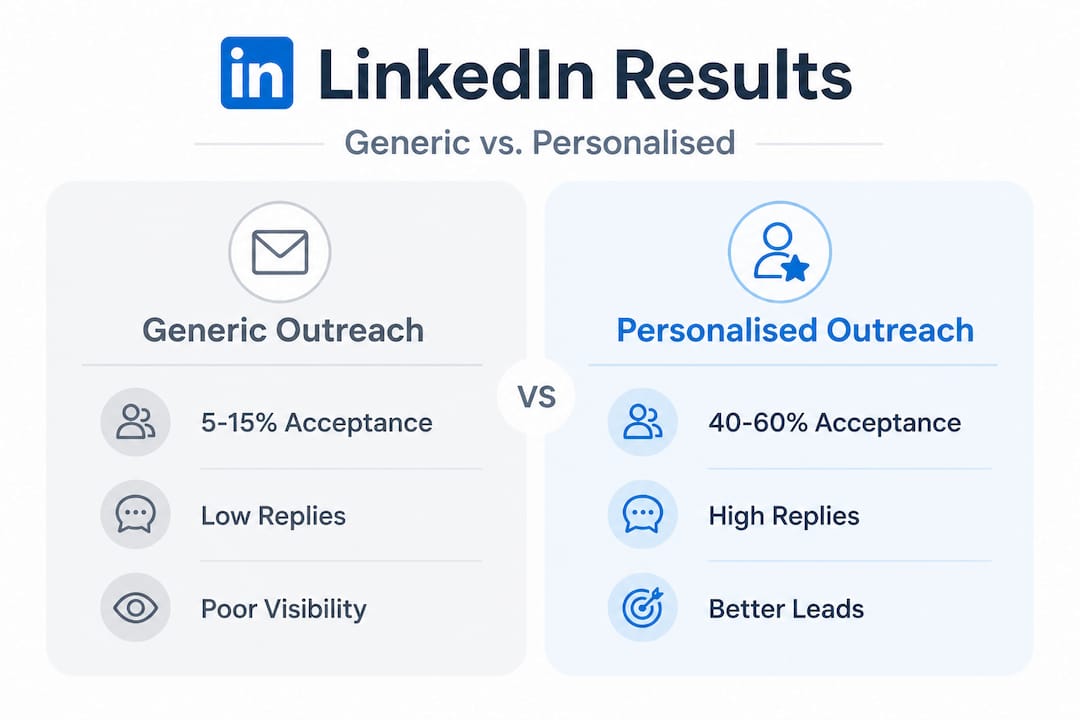
The numbers change that perspective immediately. Personalised InMails achieve response rates of 18 to 25%, a dramatic contrast to the 1 to 3% typical of untargeted messages. Spend a few extra minutes per prospect and your chances of starting a real sales conversation multiply significantly. That is not incremental improvement. That is a fundamentally different outcome.
LinkedIn's algorithm adds another layer of urgency. The platform has shifted sharply towards rewarding authenticity and expertise, using signals like dwell time, meaningful comments, and relevance to decide what gets seen. Generic content and mass messaging fail these signals. Personalised, relevant outreach passes them. The platform is actively working against the spray-and-pray approach.
For B2B marketers and salespeople at SMEs, this is genuinely good news. Larger competitors might have bigger budgets, but personalisation is a skill, not a budget line. It rewards effort, intelligence, and research. Here is a quick overview of how personalised and generic approaches compare:
| Metric | Generic outreach | Personalised outreach |
|---|---|---|
| Connection acceptance rate | 5 to 15% | 40 to 60% |
| InMail response rate | 1 to 3% | 18 to 25% |
| Message engagement | Low | High |
| Algorithm visibility boost | Minimal | Significant |
The risks of mass messaging go beyond poor results. Repeated low engagement signals tell LinkedIn's algorithm your content is irrelevant, which suppresses your visibility over time. Building tailored LinkedIn strategies from day one protects your account health and compounds results as your network grows.
The mechanics of personalisation: What actually works?
Knowing personalisation matters is one thing. Understanding the mechanics of how to do it well is what separates average performers from those who consistently fill their pipeline.
The core principle is straightforward. Before you write a single word, spend two to three minutes reviewing your prospect's recent activity. Look at their latest posts, any company announcements, shared articles, or mutual connections. One relevant detail is all you need. It transforms your message from an obvious template to a genuine conversation starter.
Messages under 400 characters perform 22% better than longer ones. This surprises most people. The instinct is to include your full value proposition, your credentials, and your call to action all in one message. Resist it. Brevity signals respect for your prospect's time and forces you to focus on the one most relevant thing.
Pro Tip: Before writing your connection request, look at the prospect's most recent post or comment. Open with a genuine reference to it. Even a single sentence of real context dramatically increases your acceptance rate and sets the tone for a two-way conversation rather than a pitch.
The best personalisation triggers to use are:
- Recent company news such as a funding announcement, product launch, or new hire.
- A specific post or article they shared or wrote in the past two weeks.
- Mutual connections who can be named naturally to build immediate trust.
- Shared groups or events on LinkedIn that signal aligned interests.
- Role or career change which represents a moment when decision-makers are actively reassessing tools and partnerships.
For a practical sense of how this plays out, consider these two approaches for connecting with a Head of Sales at a SaaS company. A generic message reads: "Hi, I came across your profile and thought it would be great to connect." A personalised version reads: "Hi Sarah, I saw your post on outbound efficiency last week and it resonated. We work with SaaS sales teams on exactly that challenge. Would love to connect." Same platform, same format. Completely different outcome.
You can explore effective LinkedIn outreach examples to see these principles applied across a range of industries and buyer personas.
Balancing AI-driven efficiency with authentic personal touch
AI tools have made it easier than ever to draft outreach at scale. That is both an opportunity and a risk. Used correctly, AI accelerates personalisation without replacing it. Used carelessly, it produces messages that feel automated, and your prospects will notice.
Here is where AI genuinely adds value in a LinkedIn workflow:
- Signal gathering: AI tools can quickly surface recent news, posts, or company updates about a prospect, giving you raw material for personalisation.
- Draft generation: AI can produce a first draft based on a brief context input, saving you time on the blank-page problem.
- Pattern analysis: Some tools identify what message structures and formats are performing well for your specific audience segment.
And here is where AI consistently falls short:
- Tone nuance: AI often produces language that sounds polished but lacks personality, which reads as corporate and forgettable.
- Humour and warmth: Genuine wit or warmth in a message signals real human presence. AI-generated versions of these qualities tend to feel forced.
- Context sensitivity: Knowing when not to mention something, for example a company going through a difficult period, requires human judgement.
"AI aids personalisation by drafting from signals, but over-reliance fails; human review ensures authenticity amid algorithm shifts."
The best approach is a hybrid workflow. Let AI gather signals and create a draft. Then a real person reviews it, adjusts the tone, and adds the specific human detail that makes it feel genuine. This takes seconds, not minutes, and it makes all the difference.
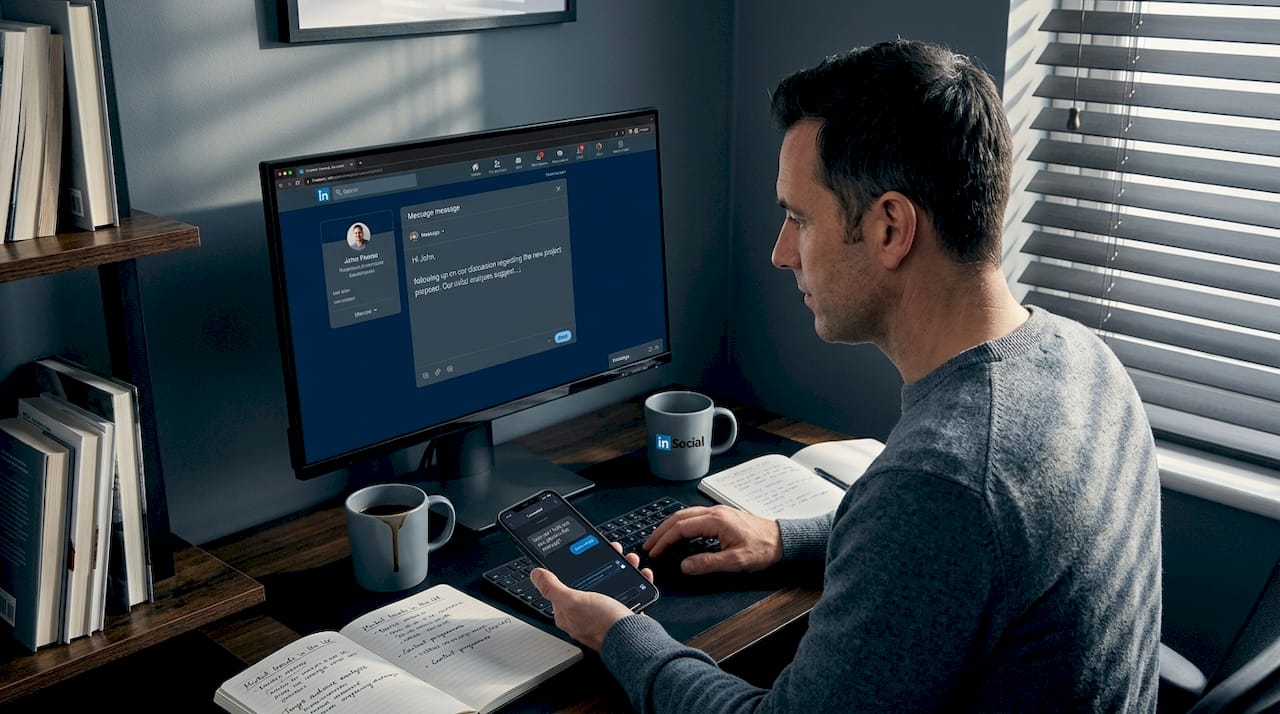
Pro Tip: Set up a simple two-step process. Use an AI tool to draft your outreach message based on key signals, then read it aloud before sending. If it sounds like a press release rather than something you would actually say, rewrite the opening line in your own voice.
For a deeper look at how this applies to content creation specifically, the approach to content creation for B2B LinkedIn follows the same human-plus-AI principle.
Choosing your strategy: Organic content or targeted outreach?
This is one of the most common questions we hear from SME sales and marketing teams: should you focus on posting great content to attract inbound leads, or invest in direct personalised outreach to go and find them?
The honest answer is that the right mix depends on your resources, timeline, and goals. But understanding the differences clearly helps you make an informed choice.
Inbound (organic content) involves posting valuable insights, commenting meaningfully on others' content, and building a reputation as a credible voice in your sector. This builds trust over time and can generate leads that come to you already warm.
Outbound (personalised direct messages and InMails) means identifying specific prospects, researching them, and initiating one-to-one conversations. This approach produces faster results but requires consistent effort and skill.
| Factor | Organic content | Personalised outreach |
|---|---|---|
| Speed to first lead | Slow (weeks to months) | Fast (days to weeks) |
| Scalability | High (one post reaches many) | Moderate (one message at a time) |
| Cost | Time-intensive | Time-intensive but targeted |
| Trust signal | Strong over time | Strong when personalised well |
| Best for | Brand building and inbound | Pipeline generation and sales |
For SMEs without large content teams, organic value-first content works well for building long-term brand equity, but personalised targeted outreach scales faster when time and resource are limited.
To decide which approach fits your situation right now, work through these steps:
- Assess your timeline. If you need pipeline in the next 30 days, prioritise personalised outreach.
- Review your content capacity. If you have someone who can post consistently two to three times per week, invest in organic content alongside outreach.
- Define your audience clarity. If you can name the specific job titles and companies you want to reach, outreach is faster. If your audience is broad, content builds wider reach.
- Measure and compare. Run both in parallel for 60 days with clear KPIs for each channel and let the data guide your allocation.
Learning how to create content for B2B success on LinkedIn is a skill worth developing even if outreach is your primary tactic. The two reinforce each other. A strong content presence warms up prospects before your message lands, making personalised outreach even more effective. You can also look at how thought leadership helps grow your personal brand over time.
Practical steps to implement personalised LinkedIn strategies
Theory is only useful if you can act on it. Here is a clear process you can apply immediately, even with limited time.
- Build a targeted prospect list. Use LinkedIn's search filters to identify prospects by job title, industry, company size, and location. Aim for a focused list of 20 to 30 names per week rather than hundreds.
- Research each prospect briefly. Spend two to three minutes per person. Note one recent post, a company update, or a mutual connection.
- Write a short, specific connection request. Keep it under 400 characters. Reference your one specific detail and state clearly but briefly why connecting makes sense.
- Send during business hours. Tuesday to Thursday mornings tend to produce the strongest engagement on LinkedIn.
- Follow up once after acceptance. When they accept, send a follow-up message that continues the conversation naturally. Do not immediately pitch. Ask a relevant question or share something genuinely useful.
- Track your results. Note acceptance rates and reply rates per message type. Iterate your approach based on what works for your specific audience.
Pro Tip: Reference a recent company news story in your initial message. Something like "I noticed [Company] just expanded into the European market. We work with a number of teams navigating that transition..." immediately signals that you have done your homework and positions you as a peer rather than a cold caller.
The LinkedIn algorithm rewards the kind of thoughtful engagement that this process produces. Every personalised conversation signals relevance and authenticity to the platform, which compounds your visibility over time.
For a complete tactical guide to generate LinkedIn leads effectively, you can explore how these steps fit into a broader lead generation system.
What most LinkedIn guides miss: Sustainable personalisation at scale
Here is the uncomfortable truth that most LinkedIn guides skip over. Personalisation is not a campaign you run once. It is a discipline you build over time, and most people fail not because of the wrong tools, but because they treat it as a one-off tactic rather than an ongoing practice.
We have observed this pattern consistently across B2B teams. A sales professional invests in their outreach, sees strong results for two or three weeks, and then quietly reverts to templates when the workload picks up. The pipeline dries up three to four weeks later, and they conclude that LinkedIn "stopped working." It did not. The discipline stopped.
The teams that sustain results treat every batch of messages as a learning loop. They ask: what worked this week and why? Which personalisation triggers generated replies? Which approaches felt forced and fell flat? They build on what they learn rather than repeating the same template forever.
There is also an important conversation to have about metrics. Acceptance rates and reply rates are useful KPIs, but they can mislead if you track them in isolation. A high acceptance rate on generic messages tells you nothing useful. A moderate acceptance rate on highly targeted messages, where every person who replies is a genuine qualified lead, is far more valuable. Quality signals matter more than volume signals.
Finally, the cost-versus-authenticity balance is real. Scaling personalisation requires systems, and systems can easily drain the human element that makes personalisation work. The goal is to use tools and processes to free up time for genuine human input, not to replace it. A LinkedIn growth strategy that compounds over time always has a real person at its centre, reviewing, learning, and adapting.
Level up your LinkedIn personalisation with expert support
Putting personalisation into practice consistently is genuinely challenging when you are running a business or managing a sales team alongside everything else. The learning curve is real, and the trial and error takes time you may not have.
That is exactly where IN Social comes in. We work with B2B SMEs to build and scale authentic, personalised LinkedIn campaigns that generate real sales conversations, not just vanity metrics. Our approach combines human expertise with smart AI tools, ensuring your outreach always sounds like you rather than a machine. Whether you are starting from scratch or looking to sharpen an existing strategy, we provide the clarity, structure, and ongoing support to make LinkedIn genuinely work for your business.
Explore our LinkedIn lead generation approach or find out more about our managed LinkedIn solutions to see how we can support your team. Your next qualified conversation could be closer than you think.
Frequently asked questions
How does LinkedIn's algorithm reward personalised content?
LinkedIn's algorithm boosts visibility for authentic content, using signals like dwell time and meaningful interactions to prioritise relevant posts over generic mass content.
Do shorter LinkedIn messages really perform better?
Yes. Messages under 400 characters receive 22% better response rates compared to longer messages, so concise, focused outreach consistently outperforms lengthy introductions.
What is an example of a great personalised connection request?
Mention a specific recent post they wrote or reference a mutual connection by name, showing genuine interest and giving the prospect a clear reason to accept.
How can AI help personalise LinkedIn outreach?
AI can suggest relevant context and draft initial messages, but human review ensures authenticity and prevents the robotic tone that undermines trust and response rates.
Is personalised outreach or content posting better for lead generation?
Personalised outreach scales faster for SMEs needing near-term pipeline, while organic content builds inbound lead flow gradually over time. The strongest strategies combine both.