

TL;DR:
- Building a strategic LinkedIn presence helps B2B companies attract decision-makers and generate qualified leads.
- Consistent, audience-focused activity and strong personal profiles are crucial for effective LinkedIn lead generation.
- Most companies succeed by providing value and authenticity rather than relying on tactical tricks or irregular posting.
LinkedIn is not a job board. That misconception costs B2B companies real revenue every year. With 76% of B2B marketers naming LinkedIn their top channel for thought leadership effectiveness, ignoring it means handing pipeline opportunities directly to your competitors. This article explains why building a strong LinkedIn brand presence is one of the smartest moves a small or medium-sized B2B company can make, what that presence actually looks like in practice, and how to turn it into a consistent source of qualified leads and genuine business growth.
Table of Contents
- The business case for LinkedIn brand presence
- What defines a strong LinkedIn brand
- How an active LinkedIn presence drives lead generation
- Common mistakes and how to avoid them
- Our perspective: What most LinkedIn advice misses for B2B brands
- How to start growing your LinkedIn brand with our help
- Frequently asked questions
Key Takeaways
| Point | Details |
|---|---|
| LinkedIn is essential for B2B | A strategic LinkedIn presence fuels lead generation and business growth for B2B companies. |
| Active presence builds authority | Consistent engagement and content position your brand as an industry leader and trusted resource. |
| Common pitfalls are avoidable | Avoid mistakes like inconsistent posting and over-promotion by focusing on value and genuine engagement. |
| Results come with time | Persistence and authenticity on LinkedIn lead to measurable increases in visibility and qualified leads. |
The business case for LinkedIn brand presence
LinkedIn is where B2B decisions happen. While other platforms attract consumer attention, LinkedIn is where procurement managers, directors, and founders research suppliers, vet partners, and form opinions about brands before a single conversation takes place. That shift in buyer behaviour makes your LinkedIn presence far more than a digital business card.
The numbers are striking. B2B marketers overwhelmingly identify LinkedIn as the most effective channel for thought leadership, outperforming email newsletters, industry blogs, and every other social platform combined. That is not a marginal advantage. It reflects where your buyers are spending their attention.
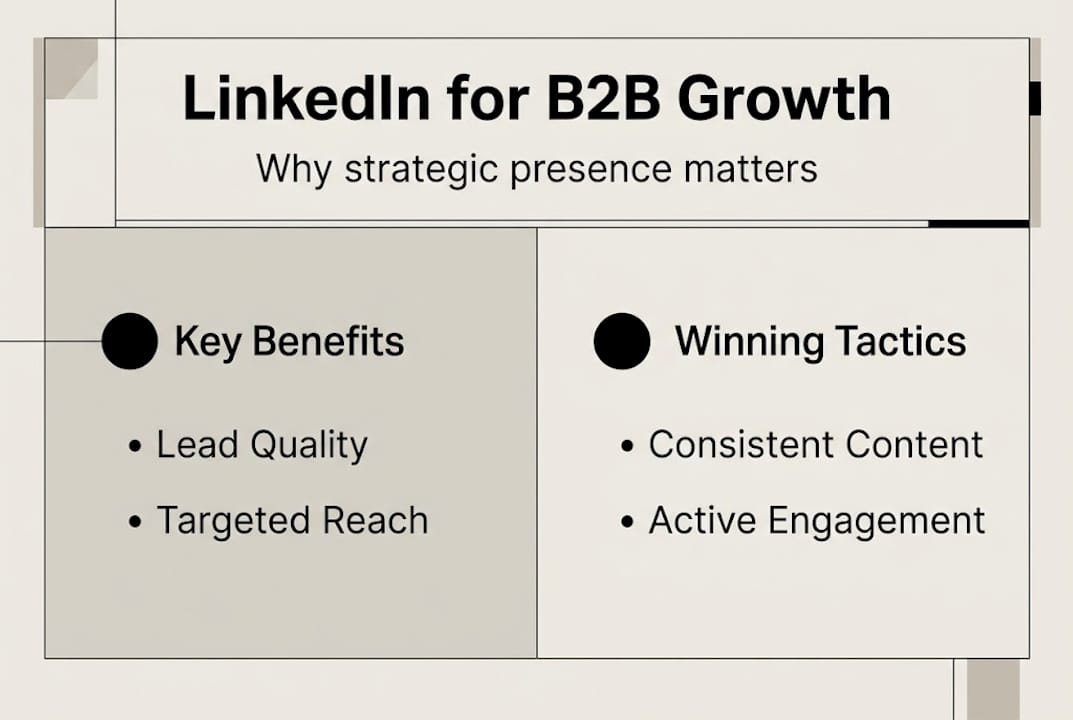
For B2B companies exploring LinkedIn for B2B growth, the platform offers three distinct advantages over other channels:
- Precision targeting: LinkedIn allows you to reach decision-makers by job title, company size, industry, and seniority. No other organic channel matches this level of specificity.
- Trust by association: When your brand appears consistently in a professional feed, it builds familiarity. Familiarity builds trust. Trust starts conversations.
- Compounding visibility: Each post, comment, and share extends your reach into new networks without additional spend.
Here is a quick comparison of how LinkedIn stacks up for B2B purposes:
| Platform | B2B lead quality | Organic reach potential | Audience targeting |
|---|---|---|---|
| High | Strong | Excellent | |
| Twitter/X | Medium | Variable | Limited |
| Low | Weak | Moderate | |
| Low | Moderate | Poor for B2B |
The benefits of LinkedIn marketing extend beyond visibility alone. Companies that invest in consistent brand presence report shorter sales cycles, warmer inbound enquiries, and stronger conversion rates from first contact. Understanding LinkedIn marketing priorities helps you focus your energy where it produces measurable results rather than spreading effort thinly across multiple platforms.
What defines a strong LinkedIn brand
Knowing LinkedIn's value, understanding what makes a brand presence strong is the next step. Many companies have a LinkedIn page. Far fewer have a brand presence. The difference is significant.
A passive presence means your company page exists, posts occasionally, and attracts little engagement. A strategic brand presence means every element of your profile and content works together to communicate authority, relevance, and trustworthiness to your ideal client.
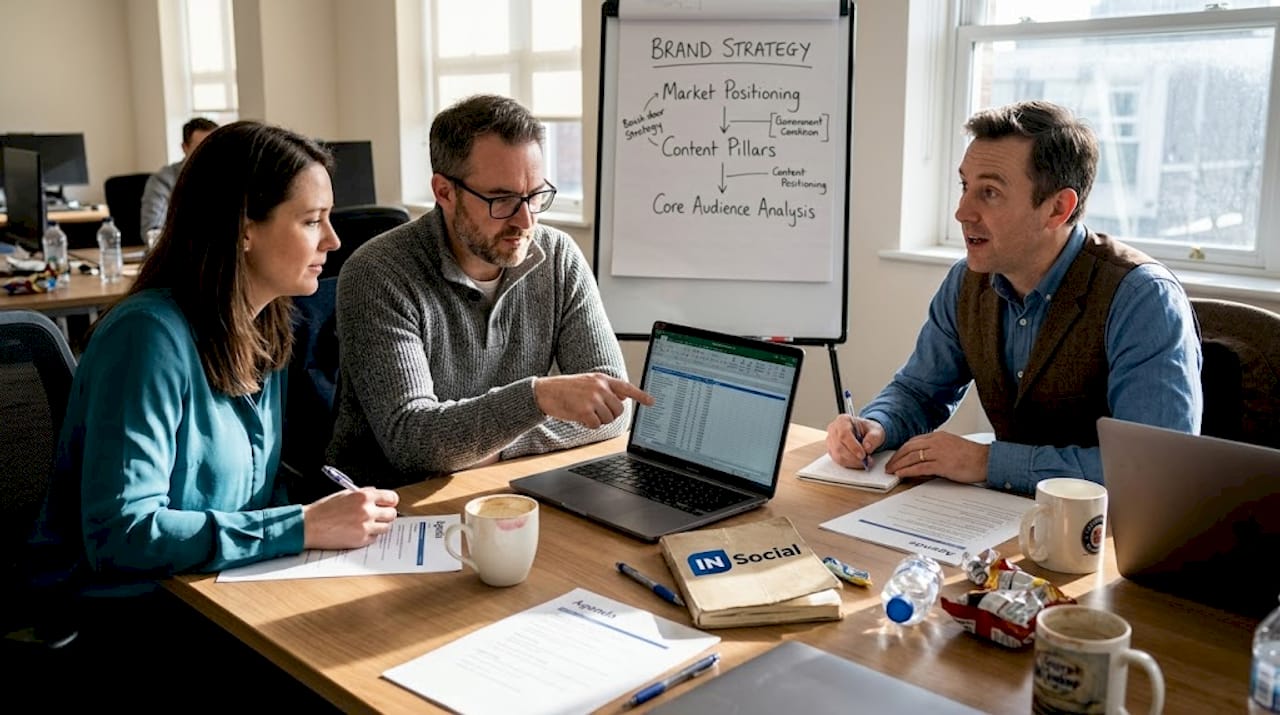
Here is what separates the two:
| Element | Passive presence | Strategic brand presence |
|---|---|---|
| Profile completeness | Partial, outdated | Fully optimised, regularly updated |
| Content frequency | Sporadic | Consistent schedule |
| Messaging | Generic | Audience-specific and value-driven |
| Visual branding | Inconsistent | Cohesive across all touchpoints |
| Engagement | Minimal | Active, two-way dialogue |
A strong LinkedIn brand rests on several core elements:
- A compelling company page with a clear value proposition, professional banner image, and complete contact information.
- Optimised personal profiles for key team members, particularly those in sales, leadership, and client-facing roles.
- Consistent visual identity using the same colour palette, logo placement, and tone across every post and profile.
- Thought leadership content that addresses real challenges your target audience faces, not just product announcements.
Building LinkedIn thought leadership strategies into your approach means your brand becomes a trusted resource rather than just another vendor in someone's feed. That shift in perception is what drives inbound enquiries.
Pro Tip: Audit your LinkedIn company page and the personal profiles of your top three client-facing team members right now. Check that branding visuals, headlines, and messaging are consistent and clearly communicate who you help and how. Inconsistency at this level quietly undermines credibility before a prospect ever reads your content.
How an active LinkedIn presence drives lead generation
Once you understand a strong brand presence, you can unlock lead generation advantages that most B2B companies leave untapped. Regular, value-driven activity on LinkedIn does not just build awareness. It actively moves prospects through your pipeline.
Here is how that works in practice:
- Post consistently to stay visible. LinkedIn's algorithm rewards regular activity. Posting three to four times per week keeps your brand in front of your network and expands your reach as connections engage with your content.
- Use personal profiles alongside your company page. Decision-makers trust people more than logos. When your team members share insights and engage in conversations, they amplify your brand's reach and credibility simultaneously.
- Engage before you pitch. Comment thoughtfully on prospects' posts, share relevant articles, and join conversations in your niche. This builds familiarity that makes outreach far warmer when it happens.
- Move conversations off the feed. Once genuine rapport exists, transition to direct messages. LinkedIn messaging strategies that focus on value rather than sales pitches consistently outperform cold outreach.
- Track what resonates. LinkedIn's native analytics show you which content formats and topics generate the most profile views, connection requests, and direct messages.
"The brands generating consistent leads on LinkedIn are not the loudest. They are the most consistently useful to their audience."
Strategic content creation for B2B LinkedIn leads means producing posts that answer real questions, challenge assumptions, and demonstrate expertise. Case studies, short insights, and honest lessons from your industry perform far better than promotional announcements.
Pro Tip: Review your LinkedIn analytics monthly and identify your top three performing posts. Look for patterns in topic, format, and posting time. Double down on what your audience responds to rather than guessing. This simple habit improves lead quality faster than posting more frequently.
If you want a structured approach to generating LinkedIn leads without wasting time on tactics that do not convert, focusing on consistency and genuine value is always the strongest foundation.
Common mistakes and how to avoid them
Even with a clear understanding, pitfalls can derail your efforts. Most B2B companies make the same handful of mistakes on LinkedIn, and they are entirely avoidable once you know what to look for.
- Inconsistent posting. Posting ten times one week and going silent for three weeks confuses the algorithm and your audience. Consistency matters more than volume. Even two quality posts per week outperform irregular bursts of activity.
- Leading with sales messages. Connecting with someone and immediately sending a pitch is one of the fastest ways to damage your brand reputation. B2B thought leadership effectiveness comes from providing value first, not broadcasting what you sell.
- Neglecting analytics. Posting without reviewing performance data means you are flying blind. LinkedIn tells you exactly what is working. Ignoring that information is a costly habit.
- Treating LinkedIn as a one-way broadcast channel. Engagement is a two-way process. If you only post and never comment, respond, or participate in others' conversations, you miss the relationship-building that actually converts connections into clients.
- Underestimating personal profiles. Many companies focus entirely on their company page while neglecting the personal profiles of their team. Buyers research individuals, not just organisations. A weak personal profile from a sales director undermines the company's credibility.
Building a strong B2B LinkedIn network requires patience and genuine engagement. There are no shortcuts that produce lasting results. Understanding why LinkedIn drives more B2B leads for UK SMBs comes down to consistent, audience-focused activity over time.
Pro Tip: Before sending any connection request or direct message, ask yourself: "Am I offering something genuinely useful here, or am I just looking to sell?" That single question will improve your response rates and protect your brand reputation on the platform.
Our perspective: What most LinkedIn advice misses for B2B brands
Most LinkedIn advice focuses on tactics. Post this format. Use this hashtag. Message at this time. That guidance is not wrong, but it misses the point entirely for B2B brands trying to build something lasting.
The companies we see generating consistent, high-quality leads on LinkedIn are not the ones with the slickest content calendars. They are the ones whose audience genuinely looks forward to hearing from them. That happens when a brand commits to being useful rather than visible.
Standard advice produces standard results. Bland, forgettable content that looks like everyone else's. The real differentiator is specificity. Talking directly to the exact problems your ideal client faces, sharing honest perspectives, and engaging with real-world LinkedIn network building as a genuine relationship-building exercise rather than a numbers game.
Authenticity is not a soft concept here. It is a commercial strategy. When your audience trusts your voice, they come to you when they are ready to buy. That is the LinkedIn advantage most companies never fully realise.
How to start growing your LinkedIn brand with our help
Building a consistent, lead-generating LinkedIn presence takes strategy, time, and the right expertise. Most B2B companies know what they should be doing but struggle to maintain momentum alongside everything else running their business demands.
At IN Social, we combine human expertise with advanced tools to build and manage LinkedIn presences that actually produce results. Whether you need fully managed LinkedIn solutions that take the day-to-day off your plate, or a targeted approach to lead generation on LinkedIn without relying on cold outreach, we have a solution built around your goals. Speak to our team today and find out how we can turn your LinkedIn presence into a consistent source of qualified leads.
Frequently asked questions
How long does it take to see results from building a LinkedIn brand presence?
Most B2B companies notice increased visibility and early engagement within two to three months, with tangible lead growth typically appearing after six to nine months of consistent activity.
Do small companies really benefit from LinkedIn branding or is it only for big brands?
Small and medium-sized B2B firms gain credibility, discoverability, and qualified leads on LinkedIn when their presence is actively and strategically managed, regardless of company size.
Is posting regularly necessary, or can I just optimise my profile?
Profile optimisation is essential, but consistent content sharing is what builds authority and keeps your brand visible to prospects. Both elements work together, and neither alone is sufficient.
What's the biggest mistake companies make on LinkedIn?
The most common mistake is posting only promotional content rather than creating value-driven, insightful posts that address real audience challenges and foster genuine engagement.